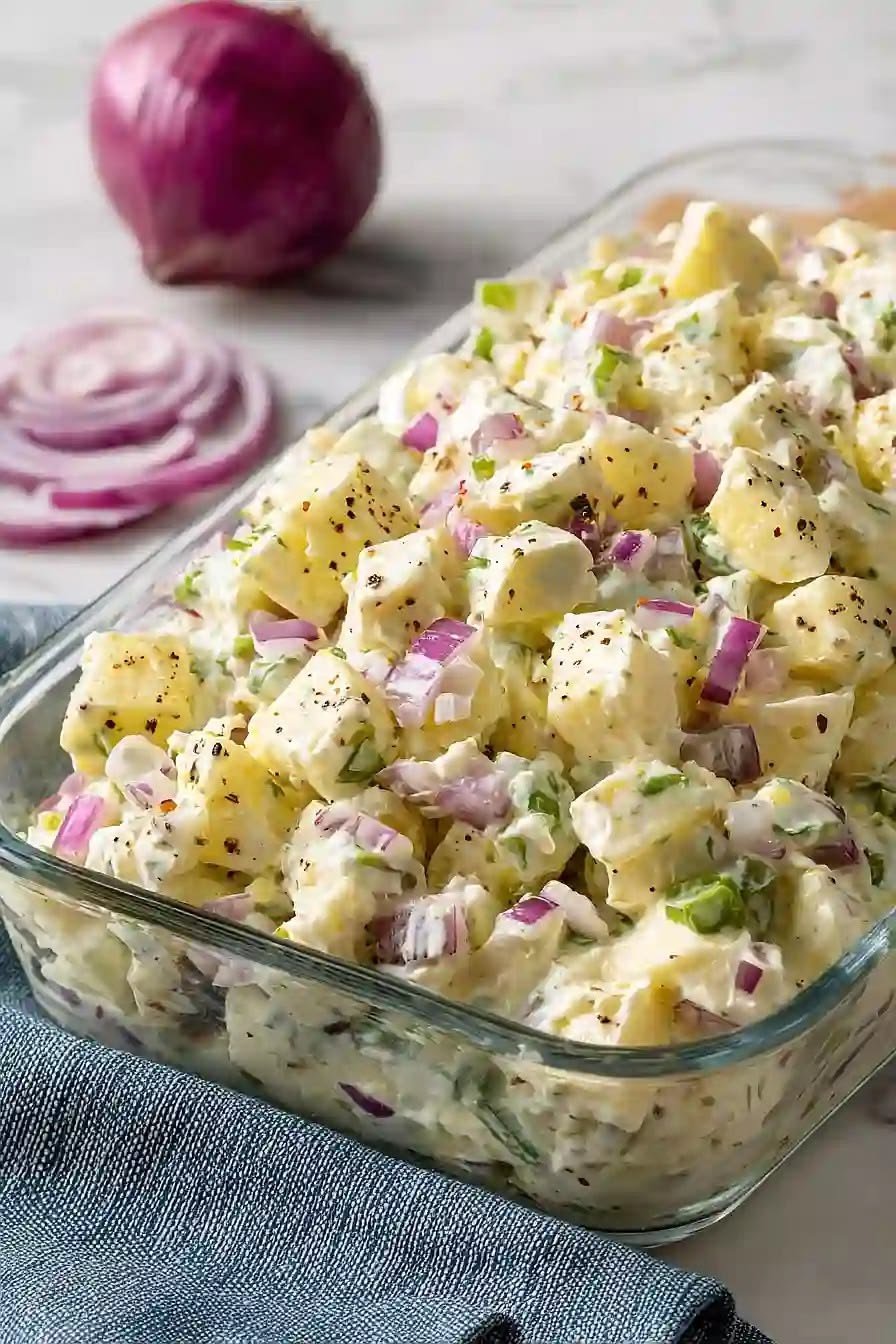
Description
Classic Potato Salad is a creamy, comforting side dish made with tender potatoes, crunchy celery, and a tangy mayonnaise dressing. Its smooth texture and refreshing flavor make it perfect for picnics, barbecues, potlucks, and family dinners. While traditional potato salad is not naturally low-carb, simple ingredient adjustments can make it more suitable for high-protein meal plans and lighter eating preferences.
Can This Classic Potato Salad Support Weight Loss Goals?
Classic Potato Salad can fit into a balanced eating plan when served in appropriate portions alongside vegetables and a protein-rich main dish. Potatoes provide carbohydrates and some fiber, while hard-boiled eggs contribute protein and important nutrients.
For a lighter version, replace some mayonnaise with plain Greek yogurt and measure the dressing rather than adding it freely. Including eggs and pairing the salad with grilled chicken, fish, or turkey can help create a more balanced, satisfying meal. No single recipe determines weight loss; overall eating habits and portion sizes matter.
Does Classic Potato Salad Fit a High-Protein Lifestyle?
Traditional Classic Potato Salad is not naturally a high-protein or low-carb dish because potatoes supply most of its carbohydrates. Hard-boiled eggs and Greek yogurt contribute protein, making the recipe more protein-friendly than a potato-only salad. Net carbohydrates will vary according to potato portions, relish, and other ingredients, but this version contains approximately 25–30 g net carbs per serving. For a more protein-focused meal, serve a smaller portion with lean meat, fish, or extra eggs.

My Personal Experience
– The creamy texture makes every bite satisfying. The mayonnaise and Greek yogurt blend into a smooth dressing that coats the potatoes evenly. Gentle mixing helps the potato cubes hold their shape instead of turning into mash.
– The mustard adds a delicious tang. Yellow mustard and apple cider vinegar balance the richness of the dressing. Sweet pickle relish adds a subtle sweetness that makes the flavors more rounded.
– The eggs make the salad heartier. Chopped hard-boiled eggs add a tender texture and savory flavor. They also provide additional protein to complement the carbohydrates in the potatoes.
– Chilling improves the flavor. Resting the salad in the refrigerator gives the dressing time to mingle with the potatoes, celery, and onion. Preparing it ahead also makes serving easier when guests arrive.
Perfect For
Summer barbecues: A creamy side dish for grilled chicken, burgers, kebabs, and fish.
Family gatherings: An easy recipe to prepare in advance for shared meals.
Picnics and potlucks: A familiar, crowd-friendly dish that travels well when kept properly chilled.
Meal prep: Convenient portions for pairing with protein-rich mains throughout the week.
High-protein meal plans: Serve alongside chicken, turkey, fish, or additional eggs to increase the overall protein content of your meal.
Low-carb eating plans: Enjoy a smaller portion with a protein-rich main dish, or replace some potatoes with lower-carb vegetables for a modified version.
Keto diet plans: Traditional potato salad is generally too high in carbohydrates for strict keto portions, but a cauliflower-based variation can offer a similar creamy flavor with fewer carbs.
Summer celebrations: A refreshing, chilled side for birthdays, holidays, and outdoor dinners.
Why You’ll Love This Recipe
– Classic homemade flavor Tender potatoes, creamy dressing, and mustard recreate the familiar taste of old-fashioned potato salad. Pickle relish adds a sweet, tangy note that complements the other ingredients.
– A lovely mix of textures Soft potatoes and chopped eggs contrast with crunchy celery and onion. Each ingredient adds something different without making the salad complicated.
– Easy to prepare ahead You can boil the potatoes and eggs in advance and mix everything before serving. Chilling the finished salad also allows the flavors to develop.
– Simple, everyday ingredients Potatoes, eggs, mayonnaise, mustard, and celery are easy to find in most grocery stores. You do not need special equipment or advanced cooking skills.
– Easy to customize Adjust the mustard, relish, herbs, and seasoning to match your preferences. Greek yogurt can replace part of the mayonnaise for a lighter, more protein-friendly dressing.
– Perfect alongside protein-rich foods Its creamy texture pairs especially well with grilled chicken, fish, lean beef, and turkey. This makes it easy to build a balanced meal around a traditional favorite.
Common Mistakes to Avoid
Overcooking the potatoes: Cook until fork-tender but still firm enough to retain their shape.
Leaving excess water on the potatoes: Drain thoroughly and allow steam to escape before adding the dressing.
Mixing too vigorously: Fold the ingredients gently with a spatula to avoid crushing the potatoes and eggs.
Skipping the chilling time: Refrigerate the salad for at least one hour so the dressing and seasonings can blend properly.
Required Equipment
Large cooking pot — Gives the potatoes enough room to cook evenly.
Colander — Drains cooking water quickly and helps prevent a watery salad.
Sharp knife — Cuts the potatoes, celery, and onion into even pieces.
Large mixing bowl — Provides space to combine ingredients without spilling.
Small mixing bowl and whisk — Blend the dressing into a smooth, consistent mixture.
Rubber spatula — Folds the dressing through the salad while keeping the potato cubes intact.
Measuring cups and spoons — Help control dressing quantities and keep the seasoning balanced.
Airtight storage container — Keeps leftovers covered and protected in the refrigerator.
Storage Instructions
Refrigerator: Transfer the potato salad to a clean, airtight container and refrigerate at 4°C (40°F) or below. For the best quality, use it within 3–4 days, provided it has been handled safely and kept properly chilled.
Freezer: Freezing is not recommended for this mayonnaise-based potato salad. The potatoes can become grainy or watery, and the dressing may separate after thawing.
Serving safety: Do not leave the salad at room temperature for more than two hours, or more than one hour when the temperature is above 32°C (90°F). Keep it in a cooler with ice during outdoor events.
Reheating: This salad is intended to be served cold, so reheating is unnecessary. Stir gently before serving, and discard any leftovers that have been held outside safe temperature conditions for too long.
High-protein meal prep tip: Store the salad separately from grilled chicken, turkey, or fish, and combine portions when serving. This makes it easier to control portions and keep the protein-rich components Classic Potato Salad
Easy • Creamy • Tangy • Make-ahead friendly
A traditional chilled side dish made with potatoes, eggs, crunchy vegetables, and creamy mustard dressing.
Preparation
20 minutes
Cooking
15 minutes
Chilling
1 hour
Total time
1 hour 35 minutes
Yield
6 servings
Difficulty
Easy
Best season
Summer
Calories
~290 per serving
Nutrition Facts (Per Serving – Approximate)
The following estimates are based on six servings using the listed ingredients. Actual values vary with potato size, mayonnaise brand, Greek yogurt, and pickle relish.
Nutrient | Approximate amount |
|---|---|
Calories | 290 kcal |
Total fat | 19 g |
Cholesterol | 100 mg |
Sodium | 450 mg |
Potassium | 650 mg |
Total carbohydrates | 29 g |
Fiber | 3 g |
Net carbs | 26 g |
Sugars | 4 g |
Protein | 7 g |
Calcium | 45 mg |
Nutrition note: These figures are estimates, not laboratory-tested values. Traditional potato salad is primarily a carbohydrate-containing side dish, with eggs and Greek yogurt supplying some protein. To increase protein per serving, add more eggs or serve it with lean meat or fish.
Notes
Storage: Refrigerate promptly in an airtight container and enjoy within 3–4 days when safely stored.
Serving temperature: Serve chilled for the best flavor and texture.
Reheating: No reheating is needed; this salad is designed to be served cold.
Allergy information: Contains eggs and commonly contains egg-based mayonnaise. Check yogurt and condiment labels for milk, mustard, or other allergens.
Flavor boosts: Add fresh dill, chopped chives, extra mustard, or a little pickle juice for more tang.
For a lighter dressing: Replace some mayonnaise with plain Greek yogurt.
For a lower-carb variation: Replace part or all of the potatoes with cooked cauliflower, adjusting cooking time to prevent it from becoming mushy.
For additional protein: Add extra hard-boiled eggs or serve alongside grilled chicken or tuna.
Frequently Asked Questions
1. Can I make classic potato salad the day before?
Yes, prepare it a day ahead and refrigerate it in an airtight container so the flavors have time to blend.
2. Which potatoes work best for potato salad?
Yukon Gold and red potatoes are excellent choices because they hold their shape when cooked until just tender.
3. How do I stop potato salad from becoming watery?
Drain the potatoes thoroughly, let excess steam escape, and cool them before gently mixing in the dressing.
4. Is classic potato salad high in protein?
Traditional potato salad provides some protein from eggs, but it is not especially high in protein unless you increase the eggs or pair it with a protein-rich main dish.
5. Is classic potato salad keto-friendly?
Traditional potato salad is generally unsuitable for strict keto diets because potatoes contain substantial carbohydrates, but a cauliflower-based alternative can be lower in net carbs.
6. Can I freeze classic potato salad?
Freezing is not recommended because the potatoes can change texture and the mayonnaise-based dressing may separate when thawed.
Final SEO Checklist
Focus keyword: Classic Potato Salad
SEO title: Includes the focus keyword.
Meta description: Includes the focus keyword.
URL slug:
classic-potato-saladOpening paragraph: Begins with the focus keyword.
Keyword usage: Include “classic potato salad” naturally in the article, relevant headings, and image alt text.
Content focus: Traditional comfort food with practical high-protein adaptations and accurate low-carb context.