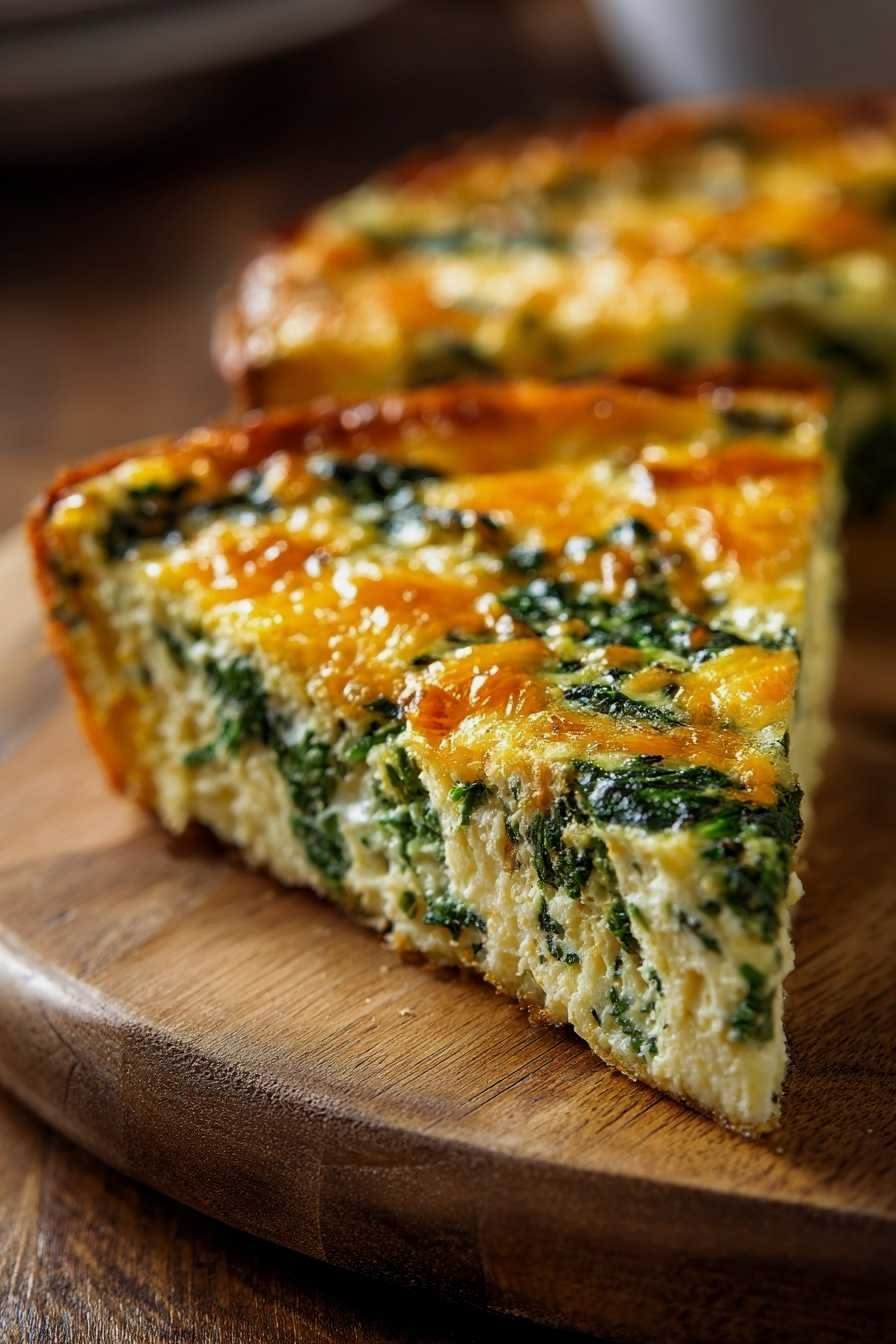
Description
Crustless Spinach & Cheese Quiche is a delicious, oven-baked dish featuring fluffy eggs, tender spinach, and melted cheese in every bite. Without a pastry crust, this savory quiche has a lighter, custard-like texture while still delivering the rich, comforting flavors of a traditional cheese quiche.
Made with simple ingredients, this crustless spinach quiche is naturally low in carbohydrates and provides protein from eggs, cheese, and milk. It is perfect for busy mornings, relaxed weekend brunches, or make-ahead lunches. Whether you follow a high-protein eating plan, prefer low-carb recipes, or simply want a satisfying homemade meal, this easy recipe is a versatile addition to your kitchen.
Short 3-Line Recipe Description
This Crustless Spinach & Cheese Quiche combines fluffy eggs, tender spinach, and melted cheddar in a creamy, savory bake.
It is naturally low in carbohydrates and provides satisfying protein without the need for a pastry crust.
Serve it warm for breakfast, brunch, lunch, or a convenient make-ahead meal.
Can Crustless Spinach & Cheese Quiche Support Weight Loss Goals?
Yes, Crustless Spinach & Cheese Quiche can fit into a weight-management eating plan when portion sizes and ingredients align with your nutritional needs. Eggs and cheese provide protein, which helps support muscle maintenance and can contribute to feeling satisfied after a meal.
Spinach adds volume, fiber, and micronutrients with relatively few calories, while skipping the pastry crust reduces the carbohydrates compared with many traditional quiche recipes. Choosing reduced-fat cheese and using milk instead of heavy cream can also help lower the calorie content.
For a balanced meal, serve a slice with fresh vegetables or a side salad. Remember that cheese and eggs still contribute calories and fat, so portion sizes matter. Weight management depends on your overall eating pattern rather than any single recipe.
Does Crustless Spinach & Cheese Quiche Fit a High-Protein Lifestyle?
Yes, this recipe fits many high-protein eating plans because eggs, cheddar cheese, and milk contribute protein in every serving.
Spinach adds color, texture, and nutrients while keeping the total carbohydrate content relatively low.
Each serving provides approximately 15–17 grams of protein and around 3–4 grams of net carbohydrates, depending on the ingredients used.
The absence of a pastry crust makes it suitable for many low-carb and gluten-free meal plans.
For an even higher-protein version, add egg whites or low-fat cottage cheese while maintaining a creamy, tender texture.
My Personal Experience
- A soft, creamy texture: The eggs set into a tender custard that holds the spinach and melted cheese together beautifully.
Letting the quiche rest after baking helps it firm up enough to slice neatly without becoming dry. - Savory cheese in every bite: Cheddar brings a rich, slightly sharp flavor that complements the mild taste of spinach.
A small pinch of black pepper and garlic powder adds depth without overpowering the main ingredients. - A lighter alternative to traditional quiche: Leaving out the pastry crust keeps the recipe simple and reduces its carbohydrate content.
The eggs and cheese still make it satisfying, so it works well for breakfast or lunch. - An easy way to enjoy spinach: Fresh spinach softens during cooking and blends naturally into the egg mixture.
Removing excess moisture before baking helps the quiche remain fluffy rather than watery. - Convenient for meal preparation: The quiche can be baked ahead, divided into slices, and refrigerated for quick meals.
Its savory flavor makes it enjoyable both warm and gently reheated.
Perfect For
- High-protein breakfasts: Eggs and cheese provide protein to start the day with a satisfying meal.
- Low-carb recipes: Skipping the crust keeps carbohydrates relatively low compared with traditional quiche.
- Keto diet plans: The recipe can fit many ketogenic meal plans when ingredient quantities and daily carbohydrate targets are considered.
- Healthy brunch menus: Serve it with tomatoes, cucumber, or a fresh green salad for a simple brunch spread.
- High-protein snacks: A small slice makes a convenient savory snack between meals.
- Meal-prep lunches: Individual slices are easy to refrigerate and reheat during the week.
- Gluten-free eating: The recipe contains no wheat crust, provided all packaged ingredients are suitable and free from gluten cross-contact.
- Vegetarian meals: Eggs, cheese, and spinach make this a satisfying meat-free option for lacto-ovo vegetarians.
This recipe is best suited to breakfast, brunch, lunch, or a light dinner rather than sweet high-protein desserts.
Why You’ll Love This Recipe
- No pastry crust required: The egg mixture forms its own structure as it bakes, making preparation easier.
You get a classic quiche-style texture without rolling dough or blind-baking a crust. - A protein-rich combination: Eggs, cheese, and milk contribute protein to every slice.
Adding cottage cheese or extra egg whites can increase the protein content further. - Naturally low in carbohydrates: Spinach and eggs keep the carbohydrate content modest without relying on specialty low-carb products.
This makes the recipe easy to adapt to a variety of lower-carbohydrate meal plans. - Simple, everyday ingredients: Spinach, eggs, cheese, milk, and seasonings create a flavorful dish without complicated preparation.
You can use fresh or frozen spinach depending on what is available. - Perfect for preparing ahead: Bake the quiche once and divide it into individual portions for later meals.
The slices reheat conveniently while retaining their savory flavor. - Easy to customize: Add mushrooms, spring onions, herbs, or a little feta cheese for extra flavor.
Keep additional vegetables well drained so the egg mixture sets properly.
Common Mistakes to Avoid
- Using wet spinach: Excess water can make the quiche watery and prevent the eggs from setting evenly. Sauté fresh spinach until wilted and cook off excess moisture, or thoroughly squeeze thawed frozen spinach.
- Overbaking the eggs: Baking for too long can create a rubbery texture. Remove the quiche when the center is just set and no longer looks liquid.
- Adding too much cheese: Excess cheese can release oil and make the center heavy. Measure the cheese carefully to maintain a balanced custard texture.
- Cutting the quiche immediately: Slicing straight from the oven can cause the pieces to fall apart. Let the quiche rest for 5–10 minutes before cutting.
Required Equipment
- 9-inch (23 cm) pie dish or quiche dish — provides enough room for the egg mixture to bake evenly.
- Mixing bowl — allows the eggs, milk, cheese, and seasonings to combine smoothly.
- Whisk — incorporates air into the eggs for a lighter texture.
- Measuring cups and spoons — help maintain consistent portions and nutrition estimates.
- Sharp knife — makes it easy to chop spinach and slice the finished quiche.
- Non-stick skillet — wilts spinach and helps evaporate excess moisture before baking.
- Silicone spatula — folds the spinach and cheese into the egg mixture without splashing.
- Food thermometer — helps verify that the egg-based dish reaches a safe internal temperature.
Storage Instructions
Refrigerator: Allow the quiche to cool slightly, then cut it into portions and place them in shallow, airtight containers. Refrigerate within two hours of cooking at 40°F (4°C) or below and consume within 3–4 days.
Freezer: Wrap individual slices in food-safe wrap or parchment, then place them in a freezer-safe airtight container or bag. Freeze for up to 2–3 months for best quality. Label each portion with the date.
Reheating: Warm a refrigerated slice in the microwave for approximately 30–60 seconds, checking the center and adding short intervals as needed. Alternatively, reheat in an oven at 325°F (165°C) for approximately 10–15 minutes. Reheat leftovers to 165°F (74°C).
High-protein meal-prep tip: Portion the quiche after resting so each slice contains a similar share of the eggs, spinach, and cheese. Store slices promptly to preserve freshness and food safety.
Recipe Details
- Preparation Time: 15 minutes
- Cooking Time: 30–35 minutes
- Total Time: 45–50 minutes
- Servings: 6
- Best Season for This Recipe: All-season
- Total Calories per Serving: Approximately 190 calories
Calories are approximate and depend on the size of the eggs, type of cheese, milk fat percentage, and amount of oil used.
Ingredients
Makes 6 servings.
Main Ingredients
- 6 large eggs
- 5 oz (140 g) fresh spinach, chopped
- 1 cup (110 g) shredded cheddar cheese
- 1/2 cup (120 ml) whole milk
- 1/4 cup (25 g) grated Parmesan cheese
- 1 tablespoon (15 ml) olive oil
- 1/4 cup (40 g) onion, finely diced
- 1 clove garlic, minced
- 1/4 teaspoon salt, or to taste
- 1/4 teaspoon freshly ground black pepper
- 1/4 teaspoon garlic powder, optional
- 1/4 teaspoon dried oregano, optional
Ingredient Notes
- Eggs: Large eggs provide structure and protein. Bring them close to room temperature for easier mixing if convenient.
- Spinach: Fresh spinach works well, but frozen spinach is also suitable. Thaw and squeeze it thoroughly before using.
- Cheddar cheese: Sharp cheddar adds a stronger flavor, while mild cheddar gives a softer, creamier taste.
- Parmesan: Adds a salty, savory flavor. Reduce the added salt if your Parmesan is particularly salty.
- Milk: Whole milk produces a creamy custard. Low-fat milk can be substituted, although the texture and nutrition will change.
- Olive oil: Used to sauté the vegetables; you can use less if your pan is non-stick.
Directions
Step 1: Preheat the oven — 5 minutes
Preheat your oven to 375°F (190°C). Lightly grease a 9-inch (23 cm) pie dish with olive oil or a little cooking spray.
Place the dish on a baking tray if you want extra stability when transferring it to the oven.
Step 2: Sauté the onion and garlic — 3 minutes
Heat the olive oil in a non-stick skillet over medium heat. Add the diced onion and cook for 2–3 minutes until softened and translucent.
Add the minced garlic and stir for another 30 seconds until fragrant. Avoid browning the garlic, as it can become bitter.
Step 3: Cook the spinach — 3–5 minutes
Add the chopped spinach to the skillet and cook over medium heat, stirring regularly, until wilted.
Continue cooking until most of the visible moisture has evaporated. If using frozen spinach, thaw it first, squeeze out excess water, and briefly sauté it with the onion and garlic.
Allow the vegetable mixture to cool slightly before combining it with the eggs.
High-protein tip: Removing excess moisture is essential for a firm, sliceable quiche that holds its protein-rich egg mixture together.
Step 4: Whisk the eggs and milk — 2 minutes
In a large mixing bowl, whisk the six eggs with the milk, salt, black pepper, and optional garlic powder and oregano.
Whisk until the yolks and whites are fully combined and the mixture looks evenly colored. Avoid whipping excessively, as too much air can cause the quiche to puff up and then sink.
Step 5: Add the spinach and cheese — 2 minutes
Stir the cooled spinach mixture into the eggs. Add the shredded cheddar and grated Parmesan, reserving a small amount of cheese for the top if desired.
Mix gently until the ingredients are evenly distributed. Pour the mixture into the prepared pie dish and spread the spinach evenly so every slice has a good balance of vegetables, cheese, and eggs.
Step 6: Bake the quiche — 30–35 minutes
Place the dish on the middle rack and bake at 375°F (190°C) for 30–35 minutes.
The edges should look set and lightly golden, while the center should have only a slight jiggle rather than a liquid movement. If the top browns too quickly, loosely cover it with foil for the final few minutes.
For food safety, the center should reach 160°F (71°C). Avoid overbaking, as the eggs can become firm and rubbery.
Step 7: Rest and serve — 5–10 minutes
Remove the quiche from the oven and let it rest for 5–10 minutes. This helps the custard finish setting and makes slicing easier.
Cut into six even portions and serve warm. Pair a slice with fresh tomatoes, cucumber salad, or roasted vegetables for a balanced meal.
Optional higher-protein variation: Replace half the whole eggs with approximately 3/4 cup (180 ml) egg whites, or add 1/2 cup (110 g) low-fat cottage cheese. Blend the cottage cheese first for a smoother texture, and recalculate the nutrition based on your chosen ingredients.
Nutrition Facts (Per Serving – Approximate)
Estimated for six servings using six large eggs, cheddar, Parmesan, whole milk, spinach, and olive oil.
- Calories: 190 kcal
- Total Fat: 14 g
- Cholesterol: 205 mg
- Sodium: 380 mg
- Potassium: 260 mg
- Total Carbohydrates: 4 g
- Fiber: 1 g
- Net Carbs: 3 g
- Sugars: 2 g
- Protein: 15 g
- Calcium: 200 mg
These are estimates rather than laboratory-tested values. Actual nutrition varies with the ingredients, cheese brand, egg size, and amount of oil retained. Net carbohydrates are calculated by subtracting fiber from total carbohydrates.
Notes
- Storage: Refrigerate slices within two hours and eat within 3–4 days, or freeze individual portions for up to 2–3 months for best quality.
- Reheating: Warm in the microwave or in a 325°F (165°C) oven until the center reaches 165°F (74°C).
- Allergy notes: This recipe contains eggs and dairy. Check cheese labels and any packaged seasonings for additional allergens or gluten cross-contact.
- Flavor boosts: Add fresh chives, nutmeg, smoked paprika, or a small amount of crumbled feta for a different flavor profile.
- Higher-protein option: Add egg whites or cottage cheese, or serve the quiche with plain Greek yogurt on the side.
- Lower-fat option: Use reduced-fat cheddar, low-fat milk, and less oil while keeping the spinach well drained.
- Vegetable variations: Mushrooms, bell peppers, and spring onions work well, but cook off their moisture before adding them to the eggs.
- Serving suggestion: Serve warm for breakfast or brunch, or pair with a crisp salad for lunch.
Frequently Asked Questions
1. Is crustless spinach and cheese quiche low-carb?
Yes, this recipe contains approximately 3 grams of net carbohydrates per serving under the stated ingredient assumptions, making it suitable for many low-carb meal plans.
2. How can I make this quiche higher in protein?
Add egg whites, blend low-fat cottage cheese into the egg mixture, or serve each slice with a side of high-protein Greek yogurt.
3. Can I use frozen spinach instead of fresh spinach?
Yes, thaw the frozen spinach completely and squeeze out as much water as possible before adding it to the egg mixture.
4. Can I prepare crustless quiche ahead of time?
Yes, bake it in advance, refrigerate the cooled slices in airtight containers, and reheat individual portions when needed.
5. Why is my crustless quiche watery?
Excess moisture from spinach or other vegetables is the most common cause, so cook the vegetables thoroughly and drain them before baking.
6. Can I freeze crustless spinach and cheese quiche?
Yes, wrap individual cooled slices and freeze them in airtight containers for up to 2–3 months for best quality.