Description
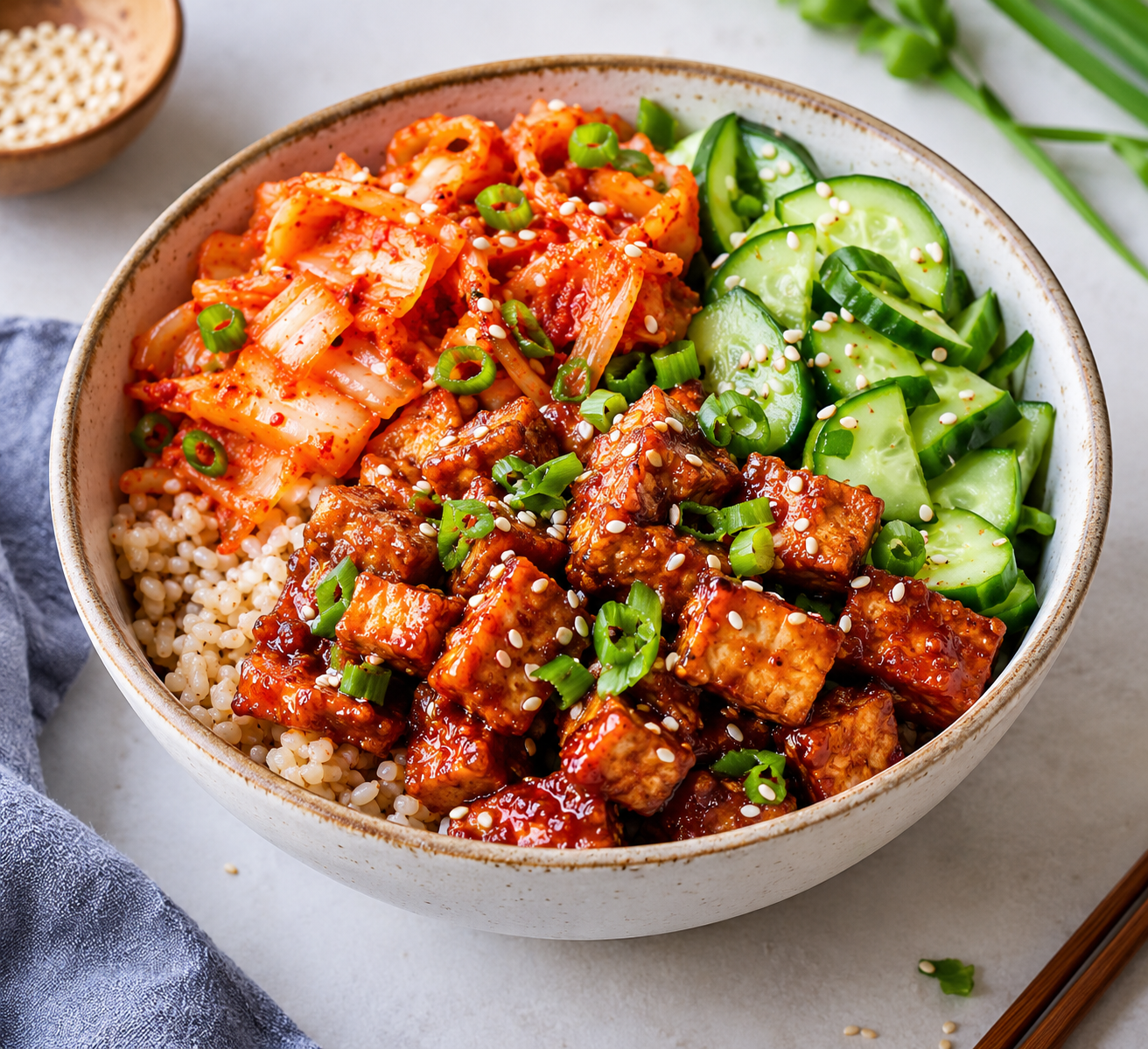
This Gochujang Glazed Tempeh & Kimchi Brown Rice Bowl combines crispy, savory tempeh with a sweet-spicy Korean glaze, tangy kimchi, and nutty brown rice. Fresh cucumber, spring onions, and sesame seeds add crunch and balance the bold flavors. This satisfying vegan protein bowl is perfect for flavorful lunches, quick dinners, and plant-based meal prep.
Can This Gochujang Glazed Tempeh & Kimchi Brown Rice Bowl Support Weight Loss Goals?
This bowl can fit into a balanced weight-management eating pattern because it combines plant-based protein from tempeh with fiber from brown rice, vegetables, and kimchi. Protein and fiber can help make meals more satisfying, while portioning the rice, oil, and gochujang glaze allows you to adjust the overall calorie content. The recipe is not a weight-loss treatment, but it can be a practical, nutrient-rich option within a balanced diet.
Does Gochujang Glazed Tempeh & Kimchi Brown Rice Bowl Fit a Vegan Lifestyle?
Yes, this recipe can be fully vegan when prepared with plant-based tempeh, brown rice, vegetables, and vegan-certified kimchi and gochujang. Tempeh provides substantial plant-based protein, while brown rice contributes carbohydrates and fiber. Net carbohydrates depend on the quantities of rice, vegetables, and added sugars in the glaze. Choose kimchi without fish sauce or shrimp paste and check the gochujang label for animal-derived ingredients to keep the bowl vegan-friendly.
My Personal Experience
– The gochujang glaze adds incredible flavor. The combination of spicy chili paste, soy sauce, garlic, and maple syrup coats the tempeh in a rich, glossy sauce. It creates a delicious sweet-and-spicy contrast without requiring a complicated marinade.
– The tempeh develops a satisfying texture. Pan-searing gives the tempeh golden edges while keeping the center pleasantly firm. This makes it a hearty alternative to meat in a plant-based rice bowl.
– Kimchi brings freshness and tang. Its fermented, slightly sour flavor cuts through the sweetness of the glaze. Adding it just before serving preserves its crunchy texture.
– The bowl works well for meal prep. Cooked brown rice and glazed tempeh can be prepared ahead of time for convenient lunches. Keeping the kimchi and fresh cucumber separate helps maintain their texture.
Perfect For
Vegan meals: A flavorful, entirely plant-based lunch or dinner.
Vegan snacks: A smaller serving can work as a savory, protein-containing snack.
Vegan breakfast: Enjoy a smaller portion with extra vegetables for a savory breakfast bowl.
Vegan diet plans: A convenient meal with plant protein, carbohydrates, and vegetables.
High-protein vegan meals: Tempeh makes this bowl a useful option for increasing plant-based protein intake.
Meal prep: Ideal for preparing several portions for busy weekdays.
Korean-inspired dinners: Great for anyone who enjoys spicy, tangy, fermented flavors.
Why You’ll Love This Recipe
– Bold Korean-inspired flavor. The gochujang glaze delivers a spicy, savory, slightly sweet coating. Tangy kimchi balances the richness for a well-rounded bowl.
– A satisfying plant-protein source. Tempeh supplies protein and a firm, hearty texture. Brown rice and vegetables complete the meal with carbohydrates and fiber.
– Easy to customize. Adjust the gochujang for a milder or hotter bowl, or add edamame for extra protein. You can also substitute quinoa for some of the brown rice.
– Great for busy days. The rice and tempeh can be cooked ahead and reheated when needed. Fresh toppings make the finished bowl taste bright and crisp.
– A colorful, textured meal. Golden tempeh, brown rice, red kimchi, and green cucumber make an appealing combination. Sesame seeds add a delicate nutty finish.
Common Mistakes to Avoid
Adding the glaze too early: Gochujang and maple syrup can burn over high heat, so reduce the heat before coating the tempeh.
Skipping the tempeh drying step: Patting the tempeh dry helps it brown instead of steam in the pan.
Using too much gochujang: The paste can be quite spicy and salty, so start with a smaller amount and adjust to taste.
Cooking the kimchi with the tempeh: Adding kimchi at the end preserves its fresh crunch and tangy flavor.
Required Equipment
Non-stick skillet: Helps brown the tempeh evenly with less oil.
Medium saucepan or rice cooker: Cooks the brown rice until tender and fluffy.
Mixing bowl: Makes it easy to combine the gochujang glaze.
Measuring spoons and cups: Help keep seasoning and portions consistent.
Sharp knife and cutting board: Make chopping tempeh and vegetables safer and easier.
Spatula: Helps turn the tempeh without breaking the pieces.
Storage Instructions
Refrigerator: Store cooked brown rice and glazed tempeh in airtight containers for up to 3–4 days at 4°C (40°F) or below.
Kimchi and fresh vegetables: Keep them in separate containers to preserve their texture and prevent the rice from becoming soggy.
Freezer: Freeze the cooked tempeh and brown rice in freezer-safe containers for up to 2 months for best quality.
Reheating: Reheat the rice and tempeh until steaming hot throughout, adding a teaspoon of water if the rice seems dry.
Food safety: Refrigerate leftovers promptly, ideally within 2 hours of cooking, and avoid repeatedly cooling and reheating the same portion.
Recipe Details
Preparation Time: 15 minutes
Cooking Time: 25 minutes
Total Time: 40 minutes
Servings: 2
Best Season: All-season
Total Calories Per Serving: Approximately 480 kcal
Ingredients
For the bowl
200 g tempeh, cut into bite-sized cubes
1 cup cooked brown rice (about 195 g)
½ cup vegan kimchi (about 75 g), drained slightly
½ medium cucumber, thinly sliced
2 spring onions, finely sliced
1 teaspoon sesame seeds
1 teaspoon neutral cooking oil
For the gochujang glaze
1 tablespoon gochujang paste (15 g), preferably vegan
1 tablespoon soy sauce or tamari (15 ml)
1 tablespoon maple syrup (15 ml)
1 tablespoon rice vinegar (15 ml)
2 garlic cloves, minced
1 teaspoon grated fresh ginger
2 tablespoons water (30 ml)
Ingredient notes: Check that the gochujang and kimchi are vegan, since some varieties contain fish sauce or seafood. Use tamari if you prefer a gluten-free option, and confirm that the tempeh and gochujang are certified gluten-free.
Directions
1. Prepare the brown rice. If using uncooked rice, rinse it and cook according to the package directions, usually around 30–40 minutes for brown rice. The grains should be tender but not mushy; using pre-cooked rice makes this recipe quicker.
2. Prepare the tempeh. Pat the tempeh dry and cut it into bite-sized cubes. For a milder flavor, steam it for 5–10 minutes before frying, then pat it dry again.
3. Mix the glaze. In a small bowl, whisk together the gochujang, soy sauce, maple syrup, rice vinegar, garlic, ginger, and water until smooth. Taste the mixture and reduce the gochujang if you prefer less heat.
4. Pan-sear the tempeh. Heat the oil in a non-stick skillet over medium heat. Add the tempeh in a single layer and cook for 6–8 minutes, turning occasionally until golden on several sides.
5. Glaze the tempeh. Reduce the heat to medium-low and pour in the sauce. Stir gently for 2–3 minutes until the tempeh is evenly coated and the glaze becomes glossy. Add a splash of water if the sauce thickens too quickly.
6. Prepare the toppings. Slice the cucumber and spring onions. Keep the vegan kimchi chilled until serving to preserve its crisp texture.
7. Assemble the bowls. Divide the cooked brown rice between two bowls. Add the glazed tempeh, kimchi, and cucumber in separate sections.
8. Garnish and serve. Sprinkle with spring onions and sesame seeds. Serve immediately while the rice is warm and the tempeh is sticky and glossy.
Nutrition Facts (Per Serving – Approximate)
Estimates are based on two servings and vary by tempeh, kimchi, gochujang, and rice brands.
| Nutrient | Amount per serving |
|---|---|
| Calories | 480 kcal |
| Total Fat | 19 g |
| Saturated Fat | 3.5 g |
| Cholesterol | 0 mg |
| Sodium | 850–1,150 mg |
| Potassium | 650–850 mg |
| Total Carbohydrates | 55 g |
| Fiber | 8 g |
| Net Carbs | 47 g |
| Sugars | 11 g |
| Protein | 25 g |
| Calcium | 140–200 mg |
Net carbs are estimated as total carbohydrates minus fiber. Nutrition values are approximate and can vary considerably by brand and portion size.
Notes
Storage tip: Store the rice, tempeh, and fresh toppings separately when possible.
Reheating tip: Warm the tempeh and rice in a skillet over medium-low heat with a small splash of water; add fresh kimchi afterward.
Allergy note: Tempeh is usually made from soybeans, and soy sauce often contains soy and wheat. Sesame seeds may also be an allergen.
Flavor boost: Add lime juice, extra ginger, or a sprinkle of toasted sesame seeds just before serving.
For extra protein: Add ½ cup shelled edamame divided between the bowls.
For less heat: Use 1–2 teaspoons of gochujang and add a little extra water and maple syrup to balance the sauce.
Frequently Asked Questions
1. Is gochujang glazed tempeh vegan? Yes, when you choose vegan tempeh, gochujang, and kimchi without fish sauce, shrimp paste, or other animal-derived ingredients.
2. Can I use tofu instead of tempeh? Yes, firm or extra-firm tofu works well, although the texture and protein content may differ.
3. Is this bowl good for meal prep? Yes, the cooked rice and glazed tempeh can be prepared ahead and refrigerated for up to 3–4 days.
4. How can I make this recipe gluten-free? Use certified gluten-free tamari and check the labels on the tempeh, gochujang, and kimchi.
5. How can I make the bowl less spicy? Reduce the gochujang and add a little extra water and maple syrup to soften the heat.
6. Can I use white rice instead of brown rice? Yes, white rice is a suitable substitute, though the fiber and nutritional profile will change.