Description
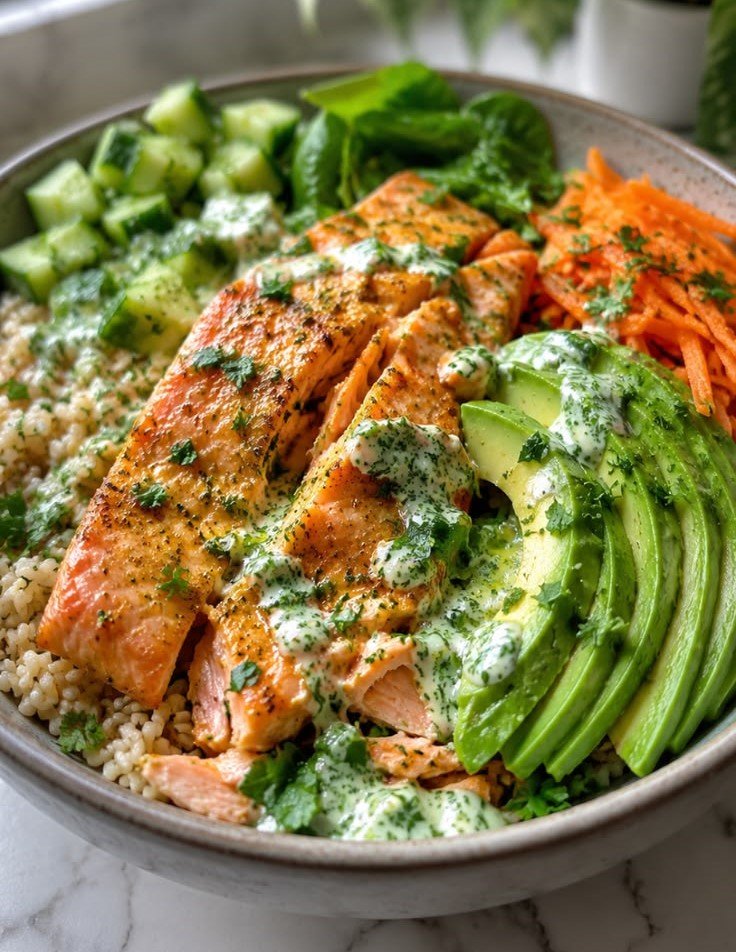
Enjoy a delicious High-Protein Anti-Inflammatory Salmon Bowl featuring tender, golden-seared salmon, creamy avocado, crisp vegetables, and a refreshing herb-yogurt dressing. Every bite combines rich, savory salmon with cool cucumber, sweet carrots, and fresh greens for a satisfying balance of flavors and textures. This easy High-Protein Anti-Inflammatory Salmon bowl is a wonderful option for anyone looking for high-protein meals, healthy fats, and a customizable low-carb dinner.
Can This High-Protein Anti-Inflammatory Salmon Bowl Support Weight Loss Goals?
Yes! This High-Protein Anti-Inflammatory salmon bowl can fit into a weight-loss plan because it combines protein-rich salmon with fiber-containing vegetables and satisfying fats from avocado. Protein helps support muscle maintenance and can promote fullness, making it easier to manage hunger between meals. Choosing a measured portion of dressing and adjusting the amount of grains or avocado can help you control calories while enjoying a flavorful, nutrient-dense meal.
Does This Salmon Bowl Fit a High-Protein Lifestyle?
This salmon bowl is an excellent choice for a high-protein lifestyle, thanks to its generous serving of salmon and Greek yogurt dressing.
Salmon provides complete protein, while avocado, cucumber, spinach, and carrots contribute fiber and beneficial nutrients.
For a lower-carb version, replace the quinoa or other grains with extra greens or cauliflower rice.
The recipe can fit low-carb and keto-inspired meal plans when the ingredients and portions are adjusted appropriately.
It is also suitable for meal preparation when stored and reheated correctly.
My Personal Experience
- The salmon is wonderfully tender.
Cooking it until just flaky keeps the fish moist and flavorful. The golden exterior adds a delicious contrast to the creamy dressing. - The herb-yogurt sauce brings everything together.
Its cool, tangy flavor balances the richness of the salmon and avocado. Fresh lemon juice makes every bite taste brighter. - The vegetables add a refreshing crunch.
Cucumber, carrots, and leafy greens create different textures that complement the soft salmon. They also make the bowl colorful and appealing. - It is easy to customize for different goals.
Extra salmon increases the protein content, while replacing grains with cauliflower rice reduces carbohydrates. The ingredients can be adjusted to suit your appetite.
Perfect For
- High-protein lunches: A satisfying combination of salmon, yogurt, and vegetables.
- Low-carb dinners: Skip the grains and serve the salmon over leafy greens or cauliflower rice.
- Healthy meal prep: Prepare the vegetables and dressing ahead of time for convenient meals.
- Keto-inspired meal plans: Use low-carb vegetables and adjust the dressing to keep carbohydrates within your target.
- Post-workout meals: Salmon provides protein to support muscle repair and recovery.
- Summer dinners: Fresh cucumber, lemon, and herbs create a light, refreshing flavor.
- Balanced family meals: Serve the ingredients separately so everyone can build a bowl they enjoy.
Why You’ll Love This Recipe
- Packed with high-quality protein.
Salmon provides all nine essential amino acids needed for normal growth and tissue maintenance. Greek yogurt adds extra protein while creating a creamy dressing. - Fresh, vibrant flavors.
Lemon and herbs brighten the rich taste of salmon and avocado. Crisp cucumber and sweet carrots provide a refreshing contrast. - Easy to customize.
Choose quinoa for extra carbohydrates or cauliflower rice for a lower-carb meal. You can also change the vegetables according to seasonal availability. - A satisfying combination of textures.
Tender fish, buttery avocado, crunchy vegetables, and smooth dressing make every bite enjoyable. The variety helps make a simple meal feel special. - Great for busy weeknights.
The salmon cooks quickly, and the dressing takes only a few minutes to prepare. With a little preparation, dinner can be ready in approximately 30 minutes.
Common Mistakes to Avoid
- Overcooking the salmon: Excessive heat or cooking time can make the fish dry. Remove it when the center is just opaque and flakes easily; use a thermometer to confirm it reaches 145°F (63°C).
- Adding dressing too early: Dressing the entire bowl before storing it can make the vegetables soggy. Keep the dressing separate until serving.
- Using unripe avocado: An unripe avocado will be firm and lack its characteristic creamy texture. Choose one that yields gently when pressed.
- Crowding the pan: Overcrowding prevents the salmon from browning properly. Cook in batches if necessary and leave space between the fillets.
Required Equipment
- Non-stick skillet: Helps prevent the salmon from sticking while allowing even browning.
- Instant-read thermometer: Helps you check that the salmon reaches a safe internal temperature.
- Cutting board and sharp knife: Make slicing cucumber, carrots, and avocado easier and more consistent.
- Small mixing bowl: Allows you to combine the yogurt dressing evenly.
- Whisk or fork: Blends the lemon juice, yogurt, and herbs into a smooth sauce.
- Measuring cups and spoons: Help maintain consistent portions and nutritional estimates.
- Serving bowls: Keep the ingredients organized and make the finished meal attractive.
Storage Instructions
Refrigerator: Store leftover salmon and vegetables in separate airtight containers at 40°F (4°C) or below. Refrigerate cooked salmon within two hours of preparation and consume it within 3–4 days. Store the yogurt dressing separately for the best texture.
Freezer: Freeze cooked salmon in a freezer-safe airtight container for up to 2–3 months for best quality. Avoid freezing cucumber, fresh greens, and avocado in the assembled bowl because their textures deteriorate after thawing. Freeze the salmon separately and prepare fresh vegetables when serving.
Reheating: Reheat salmon gently in a covered skillet over low heat or in the microwave at short intervals until it reaches 165°F (74°C). Add the fresh vegetables and dressing after reheating.
High-protein meal-prep tip: Divide the salmon into individual portions before storing. Keep the yogurt dressing and fresh vegetables separate to maintain the best flavor and texture.
Recipe Details
| Detail | Information |
|---|---|
| Preparation Time | 15 minutes |
| Cooking Time | 12–15 minutes |
| Total Time | 30 minutes |
| Servings | 2 |
| Best Season | All-season |
| Total Calories | Approximately 590 calories per serving |
Nutrition estimates assume the ingredients and quantities listed below. Actual values vary by salmon type, yogurt brand, dressing, and optional grains.
Short 3-Line Description
This High-Protein Anti-Inflammatory Salmon Bowl features golden-seared salmon, creamy avocado, crunchy vegetables, and a tangy herb-yogurt dressing.
It delivers satisfying protein, healthy fats, and fresh flavors in one colorful meal.
Enjoy it as a healthy lunch or dinner, or customize it with cauliflower rice for a lower-carb option.
📝 Ingredients
Servings: 2
For the Salmon
- 12 oz (340 g) skinless salmon fillets
- 1 tablespoon (15 ml) olive oil
- 1 tablespoon (15 ml) fresh lemon juice
- 2 garlic cloves, minced
- ½ teaspoon paprika
- ½ teaspoon dried oregano
- ¼ teaspoon ground black pepper
- ¼ teaspoon salt, or to taste
For the Bowl
- 1 medium avocado, approximately 150 g edible portion
- 1 cup (150 g) cucumber, diced
- 1 cup (60 g) fresh spinach
- 1 medium carrot, approximately 60 g, grated
- 1 cup (185 g) cooked quinoa, optional
- 1 tablespoon chopped fresh parsley
For the Creamy Herb-Yogurt Dressing
- ½ cup (120 g) plain nonfat Greek yogurt
- 1 tablespoon (15 ml) fresh lemon juice
- 1 tablespoon chopped fresh dill or parsley
- 1 small garlic clove, finely minced
- 1–2 tablespoons water, as needed
- A pinch of salt and black pepper
Ingredient notes:
- Choose plain Greek yogurt without added sugar for a higher-protein dressing.
- Quinoa is optional and can be replaced with cauliflower rice or extra greens for a lower-carb bowl.
- Use ripe but firm avocado for the best texture.
- Fresh herbs provide the brightest flavor, but dried herbs can be used in smaller quantities.
Directions
Step 1: Prepare the Salmon
Pat the salmon dry with paper towels.
In a small bowl, combine the olive oil, lemon juice, minced garlic, paprika, oregano, salt, and black pepper. Rub the mixture over both salmon fillets.
Let the salmon rest for 5 minutes while you prepare the vegetables.
Cooking tip: Drying the salmon helps it develop a golden exterior instead of steaming in the pan.
Step 2: Make the Creamy Herb Dressing
In a small bowl, whisk together the Greek yogurt, lemon juice, chopped herbs, garlic, salt, and pepper.
Add water one tablespoon at a time until the dressing reaches a smooth, pourable consistency.
Taste and adjust the lemon juice or seasoning as needed.
Cover and refrigerate while preparing the remaining ingredients.
Step 3: Cook the Salmon
Heat a non-stick skillet over medium heat for approximately 2 minutes.
Add the seasoned salmon and cook for 4–6 minutes on the first side, depending on thickness.
Turn carefully and cook for another 3–5 minutes, until the flesh is opaque and flakes easily with a fork.
The center should reach 145°F (63°C) for food safety.
Transfer the salmon to a plate and allow it to rest for 2 minutes.
High-protein cooking tip: Avoid overcooking the fish. Moist, tender salmon makes the bowl more enjoyable without requiring extra oil or sauce.
Step 4: Prepare the Vegetables
Wash and dry the spinach and cucumber.
Dice the cucumber, grate the carrot, and slice the avocado just before assembling the bowls.
If using cooked quinoa, prepare it according to its package instructions and allow it to cool slightly before serving.
Step 5: Assemble the Bowls
Divide the spinach and optional quinoa between two serving bowls.
Arrange the cucumber, grated carrot, and sliced avocado around the edges.
Place one salmon fillet in each bowl, breaking it into large pieces if desired.
Drizzle the creamy herb-yogurt dressing over the salmon and vegetables.
Finish with fresh parsley and an extra squeeze of lemon juice.
Serving tip: Keep some dressing on the side so everyone can adjust the amount to their taste.
Step 6: Serve and Enjoy
Serve immediately while the salmon is warm and the vegetables remain fresh and crisp.
For a lower-carb meal, use cauliflower rice instead of quinoa. For a more substantial high-protein meal, increase the salmon portion or serve the bowl with additional plain Greek yogurt dressing.
Nutrition Facts (Per Serving – Approximate)
Based on 2 servings and including quinoa.
| Nutrient | Approximate Amount |
|---|---|
| Calories | 590 kcal |
| Total Fat | 31 g |
| Saturated Fat | 6 g |
| Cholesterol | 95 mg |
| Sodium | 500 mg |
| Potassium | 1,400 mg |
| Total Carbohydrates | 38 g |
| Fiber | 10 g |
| Net Carbs | 28 g |
| Sugars | 8 g |
| Protein | 48 g |
| Calcium | 150 mg |
These are estimates, not laboratory-tested values. Salmon species, avocado size, yogurt brand, salt, and ingredient substitutions can change the final nutrition profile.
For a lower-carb version: Replace the quinoa with 1 cup of cauliflower rice per serving. This will reduce the total carbohydrate content while preserving the salmon’s protein contribution.
Notes
- Storage: Refrigerate leftover cooked salmon promptly in an airtight container for 3–4 days. Store the dressing and vegetables separately.
- Reheating: Warm the salmon gently until it reaches 165°F (74°C). Add the cold vegetables and dressing afterward.
- Allergy information: Salmon is a fish allergen, and Greek yogurt contains dairy. Use a suitable dairy-free dressing if you need to avoid dairy.
- Flavor boost: Add lemon zest, fresh dill, cracked black pepper, or a pinch of chili flakes for extra brightness.
- Extra protein: Increase the salmon portion or add a little more Greek yogurt dressing, adjusting the nutrition estimate accordingly.
- Lower-carb option: Replace quinoa with cauliflower rice or extra spinach and cucumber.
- Anti-inflammatory eating: Salmon provides omega-3 fatty acids, and vegetables contribute vitamins, minerals, and other beneficial compounds. This is a nutrient-dense meal, not a treatment for inflammation or a medical condition.
Frequently Asked Questions
1. Is this salmon bowl good for weight loss?
Yes, it can support weight management when its portion size and total calories fit your daily needs.
2. How much protein does one serving contain?
One serving provides approximately 48 grams of protein, depending on the salmon and yogurt used.
3. Can I make this salmon bowl without quinoa?
Yes, replace the quinoa with cauliflower rice, extra spinach, or other non-starchy vegetables for a lower-carb version.
4. Can I prepare this recipe ahead of time?
Yes, cook the salmon and prepare the dressing in advance, storing them separately from the fresh vegetables.
5. Can I use frozen salmon?
Yes, thaw frozen salmon safely in the refrigerator and pat it dry before seasoning and cooking.
6. Is this recipe suitable for a keto diet?
It can be adapted for a keto-style diet by omitting quinoa, choosing low-carb vegetables, and checking that the dressing fits your carbohydrate target.