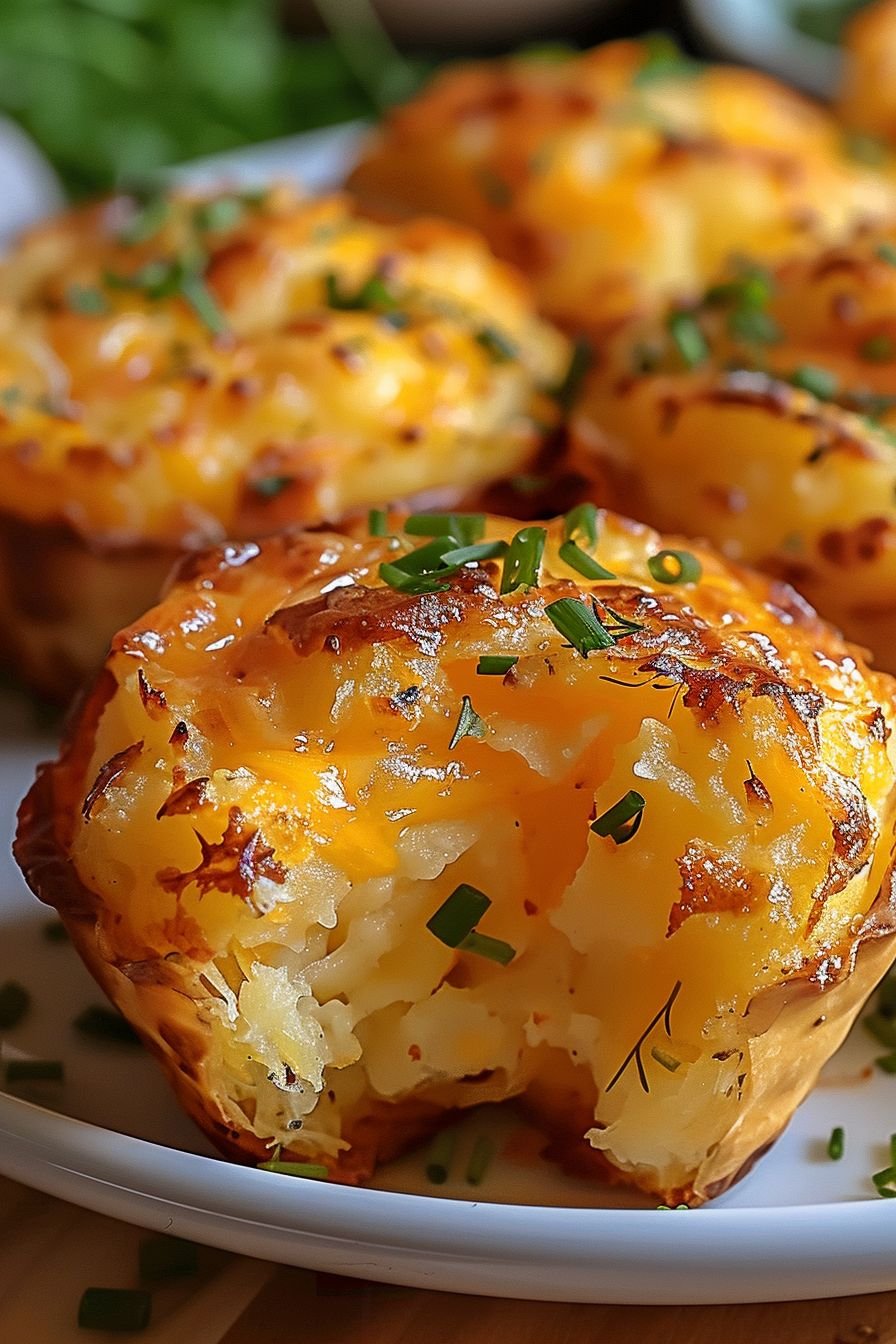
Description
These cheesy mashed potato puffs are little bites of comfort food, with golden, crispy edges, a soft and fluffy center, and delicious melted cheddar in every bite. Made with creamy mashed potatoes, eggs, cheese, and simple seasonings, they turn everyday ingredients into an irresistible snack or side dish that everyone will want to try.
This easy baked potato puffs recipe is perfect for family gatherings, lunchboxes, party appetizers, or a cozy evening snack. Eggs and cheese add protein, making these puffs more protein-rich than plain mashed potatoes, while baking offers a convenient alternative to deep-frying. Although potatoes are naturally rich in carbohydrates, you can adjust the recipe with extra cheese, cottage cheese, or other protein-rich ingredients to suit your nutrition goals.
Short 3-Line Recipe Description
These cheesy mashed potato puffs feature crispy golden edges, a fluffy potato center, and gooey cheddar cheese.
Made with mashed potatoes, eggs, cheese, and simple seasonings, they are easy to bake and full of comforting flavor.
Serve them as a savory snack, a family-friendly side dish, or a tasty party appetizer.
Can Cheesy Mashed Potato Puffs Support Weight Loss Goals?
Yes, cheesy mashed potato puffs can fit into a weight-management eating plan when enjoyed in appropriate portions. Eggs and cheese contribute protein, which supports muscle maintenance and can help make meals more satisfying. Baking the puffs instead of deep-frying them also helps control the amount of added fat.
However, potatoes contain carbohydrates, and cheese contributes calories and fat, so portion size matters. For a lighter version, use reduced-fat cheddar, add cottage cheese for extra protein, and avoid adding excessive butter or oil.
These puffs are not inherently low-carb, but they can be part of a balanced diet alongside lean protein and vegetables. Weight management depends on your overall eating pattern and energy needs rather than any single recipe.
Does Cheesy Mashed Potato Puffs Fit a High-Protein Lifestyle?
Cheesy mashed potato puffs can contribute to a high-protein lifestyle because eggs and cheddar cheese supply protein in every serving.
Potatoes provide carbohydrates for energy, along with potassium and some fiber, especially when the skins are included.
The standard recipe contains approximately 18–20 g of net carbs per serving, depending on portion size and ingredient quantities.
Although these puffs provide some protein, they are not as protein-dense as meals based primarily on lean meat, fish, or high-protein dairy.
For a higher-protein version, replace part of the mashed potato with cottage cheese and use a little extra egg or reduced-fat cheese.
My Personal Experience
- Crispy edges with a fluffy center: The puffs develop a lightly golden exterior while the mashed potato stays soft and creamy inside.
The contrast in texture makes them feel more special than ordinary leftover mashed potatoes. - Cheesy flavor in every bite: Cheddar melts into the potato mixture, adding a rich, savory taste and a delicious aroma as the puffs bake.
A little garlic powder and black pepper bring out the cheese’s flavor without overpowering the potatoes. - A clever way to use leftovers: Chilled mashed potatoes are easy to shape and help the mixture hold its form in the oven.
This makes the recipe a convenient way to transform leftover potatoes into something new. - Easy to customize: Chopped chives, parsley, paprika, or a pinch of chili flakes can give the puffs a fresh or spicy twist.
You can also experiment with cottage cheese to create a softer, more protein-rich mixture. - Perfect for sharing: Small, bite-sized puffs are easy to serve on a platter at parties, family gatherings, or casual get-togethers.
They pair well with yogurt dip, tomato salsa, or a simple garlic sauce.
Perfect For
- High-protein snacks: Eggs and cheese add protein to these savory bites, especially when paired with a yogurt-based dip.
- Family-friendly side dishes: Their cheesy flavor and soft center make them an appealing accompaniment to chicken, fish, or vegetables.
- Party appetizers: Small puffs are easy to arrange on a serving platter and eat without complicated preparation.
- Meal-prep snacks: Bake a batch ahead of time and refrigerate individual portions for quick reheating.
- Healthy comfort-food alternatives: Baking instead of deep-frying helps control added oil while keeping the puffs flavorful.
- High-protein breakfasts: Serve a few puffs with eggs or plain Greek yogurt for a more protein-rich morning meal.
- Budget-friendly cooking: The recipe makes good use of leftover mashed potatoes and everyday kitchen ingredients.
- Vegetarian meals: These puffs are suitable for many vegetarian diets when the cheese and other ingredients are vegetarian-friendly.
Are they suitable for low-carb or keto diets? Traditional potato puffs are relatively high in carbohydrates, so they are not ideal for strict keto plans. A version made with cauliflower mash and suitable low-carb ingredients can be a better alternative.
Why You’ll Love This Recipe
- A delicious way to use leftover potatoes: Chilled mashed potatoes are easy to mix, portion, and shape into little puffs.
Instead of serving the same side dish twice, you get a fresh recipe with a crispier texture. - Cheesy, savory goodness: Cheddar adds a rich flavor and helps the centers stay soft and satisfying.
Garlic powder, paprika, and black pepper give the mixture extra depth without complicated seasoning. - Baked instead of deep-fried: The oven creates golden edges without requiring a pot of hot oil.
A light coating of cooking spray helps improve browning while keeping added fat controlled. - Simple everyday ingredients: Potatoes, eggs, cheese, and seasonings are easy to find and combine.
This makes the recipe practical for both planned meals and last-minute snacks. - Easy to personalize: You can add herbs, a little Parmesan, or cottage cheese to adjust the taste and texture.
These small changes let you create a version that suits your preferences. - Great for serving a crowd: The puffs can be prepared in batches and arranged neatly on a platter.
Their small size makes them convenient for parties, lunchboxes, and family-style dinners.
Common Mistakes to Avoid
- Using watery mashed potatoes: Excess milk or water makes the mixture too soft to hold its shape. Use thick, cooled mashed potatoes and add a little extra cheese or a small amount of flour if necessary.
- Skipping the cooling step: Warm mashed potatoes can make the eggs difficult to incorporate evenly and create a loose mixture. Let the potatoes cool before mixing.
- Overfilling the muffin tin: Large portions may brown on the outside before the centers set. Fill each muffin cup about three-quarters full and keep the portions similar in size.
- Removing the puffs too early: The puffs may fall apart if their centers have not set or their edges have not browned. Bake until the tops are golden and let them rest for 5 minutes before removing them.
Required Equipment
- Large mixing bowl — gives you enough space to combine the mashed potatoes, eggs, cheese, and seasonings evenly.
- Measuring cups and spoons — help maintain consistent ingredient quantities and more reliable nutrition estimates.
- Fork or potato masher — breaks up lumps and creates a smooth, easy-to-shape mixture.
- Silicone spatula or sturdy spoon — folds the cheese and eggs into the potatoes without overworking the mixture.
- 12-cup muffin tin — shapes the mixture into evenly sized puffs with attractive golden edges.
- Cooking spray or pastry brush — helps prevent sticking and encourages browning.
- Oven thermometer — helps ensure the oven reaches the correct baking temperature.
- Cooling rack — allows steam to escape so the bottoms do not become soggy.
Storage Instructions
Refrigerator: Allow the baked potato puffs to cool until they are no longer steaming heavily, then transfer them to a shallow, airtight container. Refrigerate within two hours of cooking at 40°F (4°C) or below and consume within 3–4 days.
Freezer: Arrange completely cooled puffs in a single layer on a baking sheet and freeze until firm. Transfer them to a freezer-safe airtight container or bag, separating layers with parchment paper. Freeze for up to 2–3 months for best quality.
Reheating: For the best texture, reheat refrigerated puffs in an oven or air fryer at 350°F (175°C) for approximately 5–10 minutes, until heated through. Frozen puffs may need 12–18 minutes, depending on size. A microwave is convenient, but it may soften the crispy edges.
High-protein storage tip: Store the puffs in individual portions so you can easily track how many you eat. Eggs and cheese retain their protein content during normal storage and reheating, although proper refrigeration is essential for food safety.
Recipe Details
- Preparation Time: 15 minutes
- Cooking Time: 25–30 minutes
- Total Time: 40–45 minutes
- Servings: 4 servings (3 puffs per serving)
- Best Season for This Recipe: All-season
- Total Calories per Serving: Approximately 280–320 calories
Nutrition estimates vary according to the type of mashed potatoes, cheese, milk, and cooking spray used.
Ingredients
Makes 12 puffs, or 4 servings.
Main Ingredients
- 2 cups (about 450 g) plain mashed potatoes, cooled
- 2 large eggs
- 1 cup (about 100 g) shredded cheddar cheese
- 1/4 cup (60 ml) milk
- 2 tablespoons (15 g) all-purpose flour
- 2 tablespoons chopped fresh chives or parsley
- 1/2 teaspoon garlic powder
- 1/4 teaspoon paprika
- 1/4 teaspoon freshly ground black pepper
- 1/4 teaspoon salt, or to taste
- Cooking spray or 1 teaspoon olive oil for greasing the muffin tin
Ingredient Notes
- Mashed potatoes: Use plain, thick mashed potatoes. If using leftovers, account for any butter, cream, or milk already added.
- Cheddar cheese: Sharp cheddar provides a stronger flavor, so you may not need additional salt. Reduced-fat cheddar can be used, although melting and texture may differ.
- Eggs: Eggs help bind the mixture and provide additional protein.
- Milk: Add only enough to create a thick, scoopable mixture. You may need less if the mashed potatoes are already creamy.
- Flour: A small amount helps the puffs hold their shape. For a gluten-free version, use a suitable gluten-free flour blend.
- Herbs: Chives and parsley are optional but add freshness and color.
Directions
Step 1: Preheat the oven — 5 minutes
Preheat the oven to 400°F (200°C). Lightly coat a 12-cup muffin tin with cooking spray or brush each cup with a thin layer of olive oil.
Greasing the tin helps prevent the cheesy edges from sticking and makes the finished puffs easier to remove.
Step 2: Prepare the potato mixture — 3 minutes
Place the cooled mashed potatoes in a large mixing bowl. If the potatoes contain large lumps, mash them with a fork until the texture is reasonably smooth.
Add the garlic powder, paprika, black pepper, salt, and chopped herbs. Stir until the seasonings are evenly distributed.
Step 3: Add the eggs and cheese — 3 minutes
Crack the eggs into a separate small bowl and whisk them lightly. Add the eggs, shredded cheddar, flour, and milk to the mashed potatoes.
Mix until everything is combined and the mixture is thick enough to hold its shape on a spoon. If it looks runny, add a tablespoon of flour or a little extra cheese; if it is too stiff, add milk one tablespoon at a time.
High-protein tip: Eggs and cheddar contribute much of the protein in this recipe. For additional protein, replace a portion of the mashed potatoes with well-drained cottage cheese and recalculate the nutrition.
Step 4: Fill the muffin tin — 3 minutes
Divide the mixture evenly among the 12 muffin cups, filling each about three-quarters full. Smooth the tops lightly with the back of a spoon.
For a more pronounced golden top, sprinkle a small pinch of extra cheddar over each puff, keeping in mind that this adds calories and fat.
Step 5: Bake until golden — 25–30 minutes
Place the muffin tin on the middle rack and bake at 400°F (200°C) for 25–30 minutes.
Look for golden-brown edges, lightly crisp tops, and centers that appear set rather than wet. If the tops remain pale after the centers have set, bake for another 2–3 minutes and monitor closely.
Avoid opening the oven repeatedly during the first 20 minutes, as this can affect browning and cooking consistency.
Step 6: Rest and remove — 5 minutes
Remove the tin from the oven and allow the puffs to rest for approximately 5 minutes. Run a small silicone spatula or butter knife carefully around the edges if necessary.
The puffs should hold their shape, with a fluffy interior and lightly crisp exterior. Transfer them to a cooling rack or serve warm.
Serving tip: Enjoy three puffs per serving with a side salad, roasted vegetables, or a protein-rich Greek yogurt dip.
Nutrition Facts (Per Serving – Approximate)
Estimated per serving of 3 puffs, based on the ingredient quantities above and plain mashed potatoes made with modest amounts of milk.
- Calories: 300 kcal
- Total Fat: 13 g
- Cholesterol: 115 mg
- Sodium: 450 mg
- Potassium: 550 mg
- Total Carbohydrates: 32 g
- Fiber: 3 g
- Net Carbs: 29 g
- Sugars: 3 g
- Protein: 13 g
- Calcium: 200 mg
These figures are approximate and not laboratory-tested. Actual nutrition depends on the mashed potatoes’ preparation, cheese brand, egg size, and portion size. Net carbohydrates are calculated as total carbohydrates minus fiber.
Notes
- Storage: Refrigerate in airtight containers for 3–4 days or freeze for up to 2–3 months for best quality.
- Reheating: Use an oven or air fryer at 350°F (175°C) to restore crispness. Heat until the centers are thoroughly warmed.
- Allergy notes: This recipe contains eggs and dairy and, in its standard form, wheat. Use suitable gluten-free flour if needed and check packaged ingredients for allergen information.
- Flavor boosts: Try smoked paprika, garlic, chives, Parmesan, or a pinch of cayenne pepper.
- Higher-protein option: Replace some of the potatoes with well-drained cottage cheese or add extra egg whites, adjusting the mixture so it remains thick enough to shape.
- Lower-carb option: Replace part of the potato with mashed cauliflower. The texture will be softer, so drain the cauliflower thoroughly before mixing.
- Crispier texture: Use thick mashed potatoes, avoid excess milk, and allow the puffs to rest briefly after baking.
- Serving ideas: Pair with Greek yogurt dip, fresh salsa, grilled chicken, or a green salad for a more balanced meal.
Frequently Asked Questions
1. Can I make cheesy mashed potato puffs ahead of time?
Yes, prepare the mixture a few hours in advance and refrigerate it covered, or bake the puffs completely and refrigerate them for reheating later.
2. Can I make these potato puffs in an air fryer?
Yes, place the mixture in greased, air-fryer-safe silicone muffin cups and cook at approximately 350°F (175°C) for 12–18 minutes, checking that the centers are set.
3. How do I make cheesy mashed potato puffs higher in protein?
Replace part of the mashed potato with well-drained cottage cheese or add extra egg whites, then adjust the texture and recalculate the nutrition.
4. Why are my mashed potato puffs falling apart?
They may contain too much moisture or have been removed before setting, so use thick, cooled mashed potatoes and let the puffs rest for 5 minutes after baking.
5. Can I freeze cheesy mashed potato puffs?
Yes, freeze fully cooled puffs in a single layer before transferring them to an airtight freezer-safe container for up to 2–3 months for best quality.
6. Are cheesy mashed potato puffs low-carb or keto-friendly?
Traditional potato puffs are relatively high in carbohydrates, but a version made with mashed cauliflower and suitable low-carb ingredients can reduce the net carbohydrate content.