Description
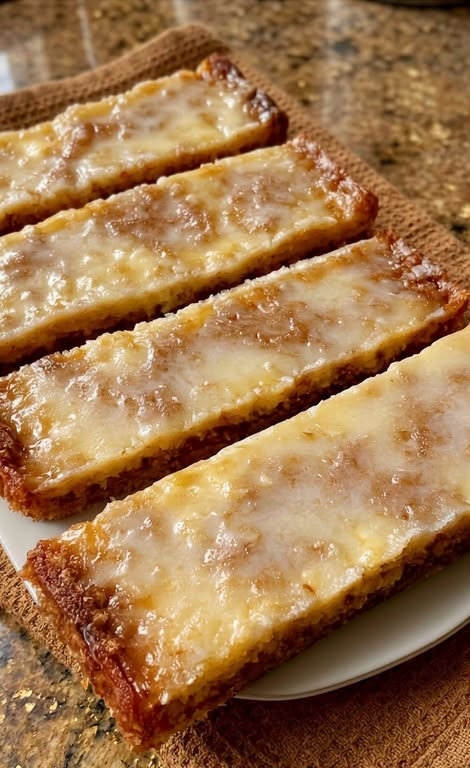
Bring the warmth of the holidays into your kitchen with these delicious Lebkuchen Bars with Orange-Ginger Icing. Inspired by traditional German gingerbread, these bars feature a soft, chewy texture and a rich blend of cinnamon, ginger, cloves, nutmeg, and honey. A bright orange-ginger icing adds a sweet citrus finish that balances the deep, warming spices beautifully.
These homemade gingerbread bars are perfect for holiday gatherings, cookie exchanges, afternoon tea, or a cozy dessert after dinner. Although traditional Lebkuchen bars are not naturally high-protein or low-carb, you can adapt the recipe with selected ingredient swaps to better suit your nutrition goals without losing their festive character.
Short 3-Line Recipe Description
These Lebkuchen Bars combine warm gingerbread spices, a soft texture, and a sweet orange-ginger icing.
Honey, cinnamon, ginger, and citrus create a festive German-inspired treat that tastes wonderful during the holiday season.
Enjoy these easy spiced dessert bars with tea, coffee, or as part of a homemade holiday cookie platter.
Can Lebkuchen Bars with Orange-Ginger Icing Support Weight Loss Goals?
Yes, these bars can fit into a balanced weight-management eating plan when enjoyed in suitable portions. Their concentrated sweetness and rich spice flavor make them satisfying as an occasional dessert, while cutting them into smaller squares helps manage portion size.
However, traditional Lebkuchen bars contain flour, honey, sugar, and icing, so they are not inherently low-calorie or low-carb. To make them more compatible with a high-protein eating plan, you can replace a small portion of the flour with suitable protein powder and serve a bar alongside plain Greek yogurt.
These changes may improve the protein content, but they also affect texture and nutrition. Weight management depends on overall energy intake, eating habits, and activity rather than any single dessert.
Do Lebkuchen Bars with Orange-Ginger Icing Fit a High-Protein Lifestyle?
Traditional Lebkuchen bars are primarily a carbohydrate-rich dessert made with flour, honey, sugar, and warming spices.
Their protein content is generally modest, although eggs and any nuts included in the recipe contribute some protein.
The orange-ginger icing adds sweetness and flavor but contributes little protein.
Depending on the ingredient quantities, a standard bar may contain approximately 20–30 g of net carbohydrates.
For a more protein-friendly version, use a carefully tested flour-and-protein-powder blend and serve the bars with Greek yogurt, while recognizing that they are not naturally keto-friendly.
My Personal Experience
- A cozy gingerbread aroma: The combination of cinnamon, ginger, cloves, and nutmeg fills the kitchen with a warm, festive fragrance as the bars bake.
These classic spices create the comforting flavor associated with traditional holiday baking. - Soft, tender centers: A carefully balanced batter produces bars that are moist in the middle with lightly set edges.
Allowing them to cool before slicing helps maintain neat squares without crumbling. - Bright orange-ginger icing: Fresh orange juice and zest bring a citrusy freshness that complements the deeper gingerbread spices.
A small amount of ground ginger adds a gentle warmth that makes the glaze especially flavorful. - Easy to serve and share: Unlike individual cookies, these bars bake together in one pan and can be cut into equal portions.
This makes them convenient for holiday parties, bake sales, and homemade edible gifts. - Simple to customize: You can add chopped almonds, a little extra orange zest, or a pinch of cardamom to personalize the flavor.
These additions allow you to make the recipe your own while keeping its traditional gingerbread character.
Perfect For
- Holiday dessert tables: Their warm spices and orange icing make these bars a festive addition to Christmas and winter celebrations.
- Homemade edible gifts: Cut the cooled bars into neat squares and package them in food-safe boxes or tins.
- Afternoon tea and coffee: The sweet, spiced flavor pairs beautifully with hot tea, coffee, or unsweetened milk.
- High-protein dessert adaptations: Serve a smaller bar with plain Greek yogurt for a more protein-rich dessert combination.
- Health-conscious baking experiments: A modified recipe using less sugar or selected flour substitutions can suit different nutrition preferences.
- Family baking days: The simple pan-baking method makes the recipe enjoyable to prepare and decorate together.
- Holiday cookie exchanges: Their bar shape and distinctive orange-ginger icing provide a delicious alternative to traditional cutout cookies.
- Meal-planned treats: Individually portioned bars can be enjoyed as an occasional dessert within a balanced eating plan.
These bars are primarily a dessert rather than a high-protein breakfast, snack, or keto food. Adaptations can change their nutritional profile, but the traditional recipe is best enjoyed as a festive treat.
Why You’ll Love This Recipe
- Classic German-inspired flavor: Cinnamon, ginger, cloves, and nutmeg create the signature warmth of Lebkuchen-style baking.
Honey adds a rounded sweetness that complements the spices. - A delicious citrus finish: Orange juice and zest give the icing a bright, fruity flavor.
Ginger adds a subtle spicy note that balances the sweetness of the bars. - Simple pan-baking method: The batter is spread into one baking pan rather than shaped into individual cookies.
This reduces preparation time and makes portioning straightforward. - Soft and satisfying texture: The right balance of wet and dry ingredients helps the bars remain tender.
Cooling them fully allows the crumb to set before slicing. - Perfect for sharing: The bars can be cut into uniform squares for guests, family, or gift boxes.
Their attractive glaze makes them look special without complicated decorating. - Easy to personalize: Chopped nuts, extra citrus zest, or a pinch of cardamom can add variety.
You can also adjust the icing thickness to create either a delicate glaze or a more pronounced topping.
Common Mistakes to Avoid
- Overmixing the batter: Excessive mixing after adding the flour can make the bars tough rather than tender. Stir just until the dry ingredients are incorporated.
- Overbaking the bars: Leaving them in the oven too long can dry out the centers. Remove them when the edges are set and a toothpick inserted in the middle comes out with a few moist crumbs but no wet batter.
- Glazing the bars while hot: Hot bars can cause the icing to melt and run off. Let the bars cool completely before spreading the orange-ginger glaze.
- Making the icing too thin: Too much orange juice can create a watery glaze that does not set properly. Add the juice gradually and adjust with more powdered sugar until the icing is thick but spreadable.
Required Equipment
- Mixing bowls — keep the dry ingredients, wet ingredients, and icing organized for easier preparation.
- Measuring cups and spoons or a kitchen scale — help maintain accurate ingredient ratios for consistent texture.
- Whisk — evenly distributes the flour, baking powder, and spices.
- Electric hand mixer or sturdy wooden spoon — makes it easier to combine the wet ingredients into a smooth batter.
- Rubber spatula — scrapes the bowl clean and helps fold the dry ingredients in gently.
- Square 8-inch (20 cm) baking pan — produces evenly sized bars with a soft, consistent crumb.
- Parchment paper — helps release the cooled bars without damaging their edges.
- Fine grater or zester — removes fragrant orange zest without including too much bitter white pith.
- Cooling rack — allows steam to escape so the bars cool evenly before icing.
- Offset spatula or spoon — spreads the orange-ginger icing smoothly over the surface.
Storage Instructions
Room temperature: Once the icing has set, store the bars in an airtight container in a cool, dry place for up to 3 days, provided the icing contains only shelf-stable ingredients and the kitchen is not excessively warm or humid.
Refrigerator: For longer storage or in warm weather, keep the bars in an airtight container in the refrigerator for up to 5–7 days. Place parchment paper between layers to protect the icing.
Freezer: Freeze the unglazed bars in a single layer until firm, then wrap individual portions or place them in a freezer-safe airtight container for up to 2–3 months for best quality. Thaw overnight in the refrigerator or at room temperature while covered, then add fresh icing if desired.
Reheating: These bars are usually best enjoyed at room temperature. If you prefer them slightly warm, microwave an unglazed bar for approximately 5–10 seconds; avoid heating the icing excessively.
High-protein-friendly tip: If serving the bars with Greek yogurt to increase the protein content of the overall snack, store the yogurt separately and add it just before eating. Proper storage preserves quality but does not increase the protein in the bars themselves.
Recipe Details
- Preparation Time: 20 minutes
- Cooking Time: 20–25 minutes
- Cooling and Icing Time: 30 minutes
- Total Time: Approximately 1 hour 15 minutes
- Servings: 16 bars
- Best Season for This Recipe: Winter, especially the holiday season
- Total Calories per Serving: Approximately 190 calories
Calories are an approximate estimate based on the ingredient quantities below and 16 equal portions. Actual values vary with the type of flour, honey, sugar, and icing used.
Ingredients
Makes 16 bars.
For the Lebkuchen Bars
- 1 1/2 cups (190 g) all-purpose flour
- 1/2 cup (100 g) packed light brown sugar
- 1/3 cup (110 g) honey
- 1/4 cup (60 g) unsalted butter, softened
- 1 large egg
- 1/4 cup (60 ml) milk
- 1 teaspoon baking powder
- 1 teaspoon ground cinnamon
- 1 teaspoon ground ginger
- 1/4 teaspoon ground cloves
- 1/4 teaspoon ground nutmeg
- 1 teaspoon finely grated orange zest
- 1/2 teaspoon vanilla extract
- 1/4 teaspoon salt
For the Orange-Ginger Icing
- 1 cup (120 g) powdered sugar
- 1 1/2 tablespoons (22 ml) fresh orange juice
- 1/2 teaspoon finely grated orange zest
- 1/8 teaspoon ground ginger
Ingredient Notes
- Honey: Adds moisture, sweetness, and a traditional gingerbread flavor. Measure accurately because extra honey can make the bars too soft.
- Brown sugar: Provides a gentle molasses-like flavor that complements the spices.
- Orange zest: Use only the colored outer peel to avoid a bitter taste.
- Fresh orange juice: Add gradually to the icing so the glaze does not become too thin.
- Ground spices: Use fresh, fragrant spices for the best aroma and flavor.
- Milk and butter: These ingredients contribute moisture and tenderness. Plant-based alternatives can be used, although the texture may differ.
Directions
Step 1: Prepare the oven and pan — 5 minutes
Preheat the oven to 350°F (175°C). Line an 8-inch (20 cm) square baking pan with parchment paper, leaving a little overhang to help lift the bars out later.
Lightly grease any exposed areas of the pan to prevent sticking.
Step 2: Combine the dry ingredients — 3 minutes
In a medium bowl, whisk together the flour, baking powder, cinnamon, ginger, cloves, nutmeg, and salt.
Mix thoroughly so the spices are distributed evenly throughout the flour. This helps prevent pockets of overly strong spice in the finished bars.
Step 3: Cream the butter and sugar — 3–4 minutes
In a separate bowl, beat the softened butter and brown sugar with an electric mixer on medium speed for 2–3 minutes, until the mixture looks creamy and slightly lighter.
Add the egg and beat until combined. Mix in the honey, vanilla extract, and orange zest.
Scrape down the sides of the bowl as needed so the ingredients combine evenly.
Step 4: Finish the batter — 2–3 minutes
Add about half the dry mixture to the wet ingredients and mix on low speed until just combined. Add the milk, followed by the remaining dry ingredients.
Stir gently until no visible flour remains. The batter should be thick and spreadable rather than liquid.
Texture tip: Avoid overmixing once the flour has been added, as this can develop excess gluten and make the bars firm.
Step 5: Bake the bars — 20–25 minutes
Spread the batter evenly into the prepared pan, smoothing the top with a spatula.
Bake on the middle oven rack at 350°F (175°C) for 20–25 minutes. Begin checking at 20 minutes.
The edges should be set, the top should look dry and lightly golden, and a toothpick inserted near the center should come out without wet batter. A few moist crumbs are fine.
Remove the pan from the oven and let it rest for 10 minutes before transferring the slab to a cooling rack. Allow it to cool completely before icing.
Step 6: Prepare the orange-ginger icing — 3 minutes
Place the powdered sugar and ground ginger in a small bowl. Add the orange zest and 1 tablespoon of orange juice.
Whisk until smooth, then add the remaining juice a little at a time until the icing reaches a thick but spreadable consistency.
If the icing is too thick, add a few drops of orange juice. If it is too thin, whisk in additional powdered sugar.
Step 7: Ice and slice — 5 minutes
Spread the icing evenly over the completely cooled bars using an offset spatula or the back of a spoon.
Allow the icing to set for approximately 15–20 minutes before slicing. Lift the slab from the pan using the parchment overhang and cut it into 16 equal squares with a sharp knife.
Serve at room temperature with tea, coffee, or your favorite warm drink.
High-protein serving tip: Pair one bar with a serving of plain Greek yogurt for a more protein-rich snack. This increases the protein in the overall snack without changing the traditional flavor of the Lebkuchen bars.
Nutrition Facts (Per Serving – Approximate)
Based on 16 bars made with the ingredients listed above.
- Calories: 190 kcal
- Total Fat: 5 g
- Cholesterol: 25 mg
- Sodium: 75 mg
- Potassium: 65 mg
- Total Carbohydrates: 34 g
- Fiber: 1 g
- Net Carbs: 33 g
- Sugars: 23 g
- Protein: 3 g
- Calcium: 20 mg
These are estimates rather than laboratory-tested values. Exact nutrition varies by ingredient brand, egg size, icing thickness, and portion size. Net carbohydrates are calculated as total carbohydrates minus fiber.
Notes
- Storage: Keep the bars in an airtight container and separate layers with parchment paper to protect the icing.
- Reheating: These bars are best at room temperature; warm unglazed portions briefly if desired.
- Allergy notes: This recipe contains wheat, egg, and dairy. Honey is not suitable for infants under 12 months. For gluten-free baking, use a tested gluten-free flour blend designed for bars or cakes.
- Flavor boosts: Add extra orange zest, a pinch of cardamom, or finely chopped crystallized ginger for a more distinctive holiday flavor.
- Protein adjustment: Replacing some flour with protein powder requires recipe testing because different powders absorb moisture differently and may make the bars dry.
- Sweetness adjustment: The icing can be reduced or applied in a thinner layer if you prefer a less sweet dessert.
- Clean slicing: Use a sharp knife and wipe the blade between cuts for neat squares.
- Serving suggestion: Pair a bar with plain Greek yogurt or a glass of milk when you want a snack with additional protein.
Frequently Asked Questions
1. What are Lebkuchen bars?
Lebkuchen bars are a bar-shaped variation inspired by traditional German spiced gingerbread, typically flavored with warm spices, sweeteners, and sometimes citrus or nuts.
2. Can I make Lebkuchen bars ahead of time?
Yes, bake the bars a day ahead, cool completely, store them airtight, and add the orange-ginger icing when convenient.
3. Can I make the orange-ginger icing without fresh oranges?
Yes, you can use bottled orange juice and a small amount of ground ginger, although fresh orange zest provides a brighter citrus aroma.
4. Are Lebkuchen bars low-carb or keto-friendly?
Traditional Lebkuchen bars are not low-carb or keto-friendly because flour, honey, brown sugar, and icing contribute substantial carbohydrates.
5. How do I keep Lebkuchen bars soft?
Measure the flour accurately, avoid overmixing, and remove the bars from the oven once the center is set rather than baking until completely dry.
6. Can I freeze Lebkuchen bars?
Yes, freeze the cooled, preferably unglazed bars in airtight packaging for up to 2–3 months for best quality and add fresh icing after thawing.