Description
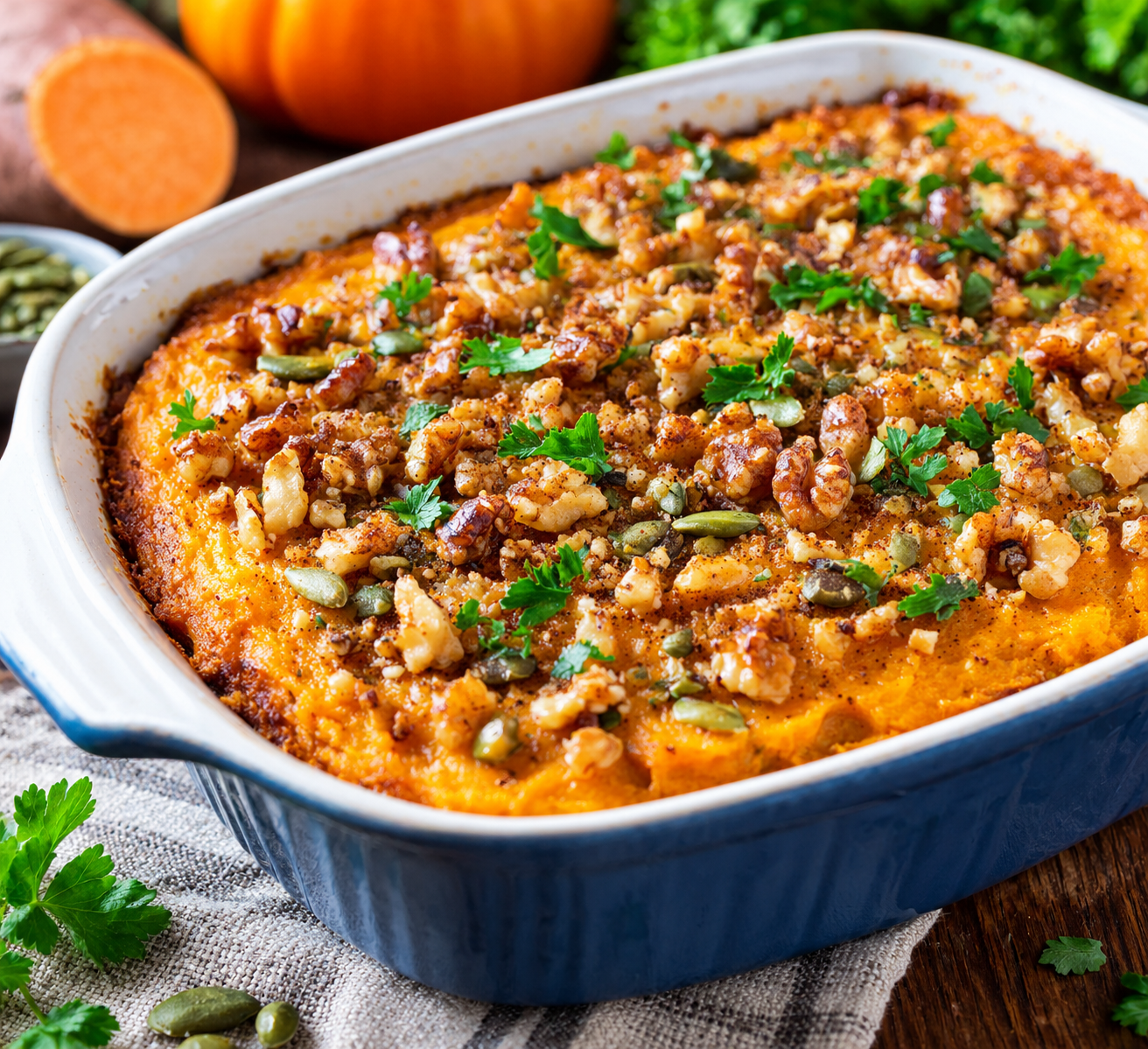
This Anti-Inflammatory Sweet Potato Pumpkin Casserole combines creamy mashed sweet potatoes and pumpkin puree with Greek yogurt, cinnamon, turmeric, ginger, and nutmeg. The result is a naturally sweet, warmly spiced casserole with a smooth center and crunchy walnut-and-pumpkin-seed topping.
It makes a comforting side dish for roasted meats, salmon, or turkey while also working beautifully for breakfast and brunch. Greek yogurt contributes protein, while pumpkin seeds and walnuts add texture, fats, and extra nutritional value.
Although this recipe contains wholesome ingredients and some protein, its approximately 35 g net carbs per serving means it is better described as a nutrient-conscious casserole rather than a strict low-carb or keto recipe.
Short 3-Line Description
Creamy sweet potatoes and pumpkin create a naturally sweet, velvety casserole with cozy fall spices.
Greek yogurt adds richness and protein, while walnuts and pumpkin seeds provide a satisfying crunch.
Serve it warm for breakfast, brunch, or alongside your favorite grilled or roasted protein.
Can This Anti-Inflammatory Sweet Potato Pumpkin Casserole Support Weight Loss Goals?
This casserole can fit into a balanced eating pattern when portion size and the rest of the meal are considered. Sweet potatoes and pumpkin provide carbohydrates and fiber, while Greek yogurt, walnuts, pumpkin seeds, and egg contribute protein and fats that make the dish more substantial.
The original recipe provides approximately 7 g protein and 7 g fiber per serving, which can make it more satisfying than a dessert-style casserole made primarily with refined ingredients.
For someone specifically prioritizing a high-protein meal plan, however, this casserole is best paired with a protein-rich main such as grilled chicken, salmon, turkey, or another suitable protein source rather than relied on as the primary protein component.
Does Anti-Inflammatory Sweet Potato Pumpkin Casserole Fit a High Protein Lifestyle?
This casserole contains Greek yogurt, egg, walnuts, and pumpkin seeds, which provide protein alongside the sweet potato and pumpkin base.
At approximately 7 g protein per serving, it is protein-containing but not especially high in protein compared with dedicated high-protein recipes.
The recipe provides about 35 g net carbs per serving, so it does not fit a strict low-carb or keto approach without substantial modification.
For a higher-protein meal, serve a moderate portion alongside grilled chicken, salmon, turkey, or another lean protein.
My Personal Experience
- The texture is especially creamy.
Mashed sweet potatoes and pumpkin puree blend into a smooth, spoonable base.
Greek yogurt helps make the casserole rich without requiring a heavy cream-based sauce. - The spice combination gives it a cozy flavor.
Cinnamon, ginger, nutmeg, turmeric, vanilla, and black pepper create layers of warmth.
The spices complement the natural sweetness of pumpkin and sweet potato without overpowering them. - The topping adds an important crunch.
Walnuts and pumpkin seeds contrast nicely with the soft casserole underneath.
Toasting the nuts and seeds first can make their flavor even more pronounced. - It works especially well beside savory proteins.
The natural sweetness pairs beautifully with roasted turkey, chicken, or baked salmon.
This makes it easy to turn the casserole into part of a balanced meal. - It is flexible enough for breakfast or brunch.
The creamy texture and warming spices make it suitable for a morning serving.
A small portion can also accompany eggs or another protein-rich breakfast food.
Perfect For
- High-protein meal plans: Pair with grilled chicken, turkey, salmon, or tofu to increase the protein content of the complete meal.
- Balanced low-carb-inspired meals: Use a smaller portion and serve it with non-starchy vegetables and a protein-rich main.
- High-protein breakfast: Serve alongside eggs, Greek yogurt, or another protein-rich breakfast option.
- Healthy brunch: Its creamy texture and warm spices make it a comforting addition to a weekend brunch.
- Holiday dinners: The pumpkin and sweet potato combination works naturally with turkey and other roasted dishes.
- Fall and winter meal prep: It can be prepared ahead and reheated for convenient servings.
- Keto diet plans: The original recipe is not keto-friendly because of its approximately 35 g net carbs per serving, so it would require significant ingredient changes to fit a strict keto plan.
Why You’ll Love This Recipe
- Creamy without complicated preparation.
The sweet potatoes, pumpkin puree, and Greek yogurt create a smooth texture with simple mixing.
There is no complicated sauce or stovetop preparation required. - Naturally sweet and warmly spiced.
Maple syrup enhances the pumpkin and sweet potato without making the casserole overwhelmingly sweet.
Cinnamon, ginger, and nutmeg give every bite a comforting seasonal flavor. - Crunchy walnut and pumpkin seed topping.
The soft casserole gets a satisfying textural contrast from the seeds and nuts.
They also add additional fats and some protein to the overall dish. - Easy to pair with protein.
Serve it beside grilled lemon chicken, baked salmon, roasted turkey, or tofu.
This is particularly useful when building a more protein-focused meal. - Great for make-ahead meals.
The casserole can be assembled ahead of time and refrigerated before baking.
That makes it practical for busy mornings, brunches, and holiday meal preparation.
Common Mistakes to Avoid
- Using pumpkin pie filling instead of pumpkin puree
Pumpkin pie filling contains added sweeteners and spices that can change the recipe considerably. Use plain pumpkin puree. - Using watery pumpkin puree
Excess moisture can make the casserole loose instead of creamy and set. Drain or choose a thicker pumpkin puree when necessary. - Overbaking the casserole
Baking too long can dry out the edges and make the center less creamy. Remove it when the top is golden and the casserole is hot throughout. - Skipping the topping balance
Adding too many walnuts or pumpkin seeds can overwhelm the soft pumpkin mixture. Use the specified quantities for a balanced crunchy layer.
Required Equipment
- Large mixing bowl — provides enough space to combine the sweet potatoes, pumpkin, yogurt, egg, and seasonings evenly.
- 9-inch baking dish or similar casserole dish — spreads the mixture into an even layer for consistent baking.
- Potato masher — helps create a smooth mashed sweet potato base.
- Measuring cups and spoons — keep the sweet and savory seasoning balance consistent.
- Spatula — makes it easy to spread the casserole evenly in the baking dish.
Storage Instructions
Refrigerator: Allow leftovers to cool before transferring them to an airtight container. Refrigerate for up to 4 days, as specified by the source recipe.
Freezer: For longer storage, portion the cooled casserole into freezer-safe airtight containers or bags. The source recommends freezing for approximately 2 months.
For best texture, freeze individual portions rather than repeatedly freezing and thawing the entire casserole.
Reheating: Warm refrigerated portions in the microwave in short intervals or place them in a covered oven-safe dish at about 325°F/165°C until heated through. Add a small spoonful of Greek yogurt after reheating if you want extra creaminess.
Recipe Details
- Preparation Time: 20 minutes
- Cooking Time: 40 minutes
- Total Time: 1 hour
- Servings: 6
- Serving Size: Approximately 1 cup
- Difficulty: Easy
- Cuisine: American
- Cooking Method: Oven-baked
- Best Season: Fall, winter, and holiday season; suitable year-round
- Total Calories: Approximately 285 calories per serving
📝 Ingredients
- 3 cups mashed sweet potatoes — cooked and mashed; roasted sweet potatoes can provide deeper flavor.
- 2 cups pumpkin puree — use plain pumpkin puree, not pumpkin pie filling.
- ½ cup Greek yogurt — plain Greek yogurt adds creaminess and protein.
- 2 tablespoons olive oil — adds richness and flavor; avocado oil can be substituted.
- 2 tablespoons maple syrup — provides mild sweetness; reduce for a less-sweet casserole.
- 1 large egg — helps the casserole set during baking.
- 1 teaspoon ground cinnamon
- ½ teaspoon sea salt
- ½ teaspoon ground turmeric
- ½ teaspoon ground ginger
- ¼ teaspoon ground nutmeg
- ½ teaspoon vanilla extract
- ¼ teaspoon black pepper
- ⅓ cup walnuts — chopped; pecans can be substituted.
- 2 tablespoons pumpkin seeds — add crunch; sunflower seeds can be used instead.
- 1 tablespoon fresh parsley — for finishing and color.
Directions
1. Prepare the Oven
Preheat the oven to 375°F (190°C).
Lightly grease a suitable baking dish with a little olive oil. The original recipe specifies heating the oven to 190°C before assembling the casserole.
2. Prepare the Sweet Potato Mixture
Add the mashed sweet potatoes, pumpkin puree, Greek yogurt, olive oil, maple syrup, and egg to a large bowl.
Mix until the ingredients are evenly incorporated and the mixture looks creamy.
High-protein tip: Use plain Greek yogurt with a higher protein content if you want to increase the protein contribution without changing the basic structure of the recipe.
3. Add the Spices
Add cinnamon, sea salt, turmeric, ginger, nutmeg, vanilla extract, and black pepper.
Stir thoroughly until the spices are distributed throughout the pumpkin and sweet potato mixture.
4. Check the Texture
Whisk or stir until the mixture looks smooth and cohesive.
It should be thick enough to hold its shape when stirred but soft enough to spread easily into the baking dish.
5. Transfer to the Baking Dish
Pour the mixture into the prepared dish.
Use a spatula to spread the surface into an even layer so the casserole cooks uniformly.
6. Add the Crunchy Topping
Scatter the walnuts and pumpkin seeds evenly over the surface.
For extra flavor, lightly toast the walnuts and pumpkin seeds before adding them, but allow them to cool first.
7. Bake
Place the casserole in the preheated 375°F (190°C) oven.
Bake for approximately 35–40 minutes, or until the casserole is hot throughout and the top looks lightly golden. The source recipe specifies approximately 35 minutes of baking.
8. Rest Before Serving
Remove the casserole from the oven and allow it to cool for approximately 10 minutes.
This short resting period helps the mixture settle and makes it easier to serve neatly.
9. Finish and Serve
Garnish with fresh parsley and serve warm.
For a higher-protein meal, pair a serving with grilled lemon chicken, baked salmon, roasted turkey, or grilled tofu.
Nutrition Facts Per Serving – Approximate
The source recipe provides the following approximate nutrition values per serving:
- Calories: 285 kcal
- Fat: 12 g
- Cholesterol: Approximately 30–35 mg
- Sodium: 245 mg
- Potassium: Approximately 450–550 mg
- Total Carbohydrates: 42 g
- Fiber: 7 g
- Net Carbs: 35 g
- Sugars: 12 g
- Protein: 7 g
- Calcium: Approximately 70–90 mg
Nutrition values are approximate. Actual amounts can vary according to the specific Greek yogurt, pumpkin puree, sweet potatoes, maple syrup, nuts, seeds, and other brands or ingredients used.
Notes
- Storage: Refrigerate leftovers in an airtight container for up to 4 days or freeze for approximately 2 months.
- Reheating: Reheat individual portions gently to avoid drying the casserole.
- Pumpkin: Always use plain pumpkin puree rather than pumpkin pie filling.
- Dairy-free option: Plain unsweetened dairy-free yogurt can replace Greek yogurt, although the protein content may change.
- Nut allergy: Replace walnuts with sunflower seeds if needed, and check the pumpkin seeds for cross-contact depending on dietary requirements.
- Gluten-free: The listed ingredients are naturally gluten-free, but packaged ingredients should still be checked for cross-contact if required.
- Flavor boost: Freshly grated ginger gives a stronger flavor than dried ginger.
- Deeper flavor: Roasting the sweet potatoes before mashing them can intensify their natural sweetness.
- Crunch: Lightly toasting the walnuts and pumpkin seeds before topping the casserole can add extra depth.
- Protein boost: Serve the casserole alongside grilled chicken, salmon, turkey, eggs, or another protein-rich food rather than treating the casserole itself as a high-protein main dish.
- Carb awareness: With approximately 35 g net carbs per serving, portion size matters for anyone following a low-carb eating pattern.
Frequently Asked Questions
1. Can I make this casserole ahead of time?
Yes, you can assemble the casserole more than 24 hours ahead, refrigerate it, and bake it when needed.
2. Can I use fresh pumpkin?
Yes, cooked fresh pumpkin can be pureed and used in place of canned pumpkin puree.
3. Can I make this casserole dairy-free?
Yes, use plain unsweetened dairy-free yogurt instead of Greek yogurt, keeping in mind that the protein content may differ.
4. Can I use butternut squash instead of sweet potato?
Yes, mashed cooked butternut squash can replace the sweet potato, although it will change the flavor and carbohydrate profile.
5. How do I make the topping more flavorful?
Lightly toast the walnuts and pumpkin seeds before sprinkling them over the casserole.
6. Is this casserole keto-friendly?
The original version is not suitable for a strict keto diet because it contains approximately 35 g net carbohydrates per serving.