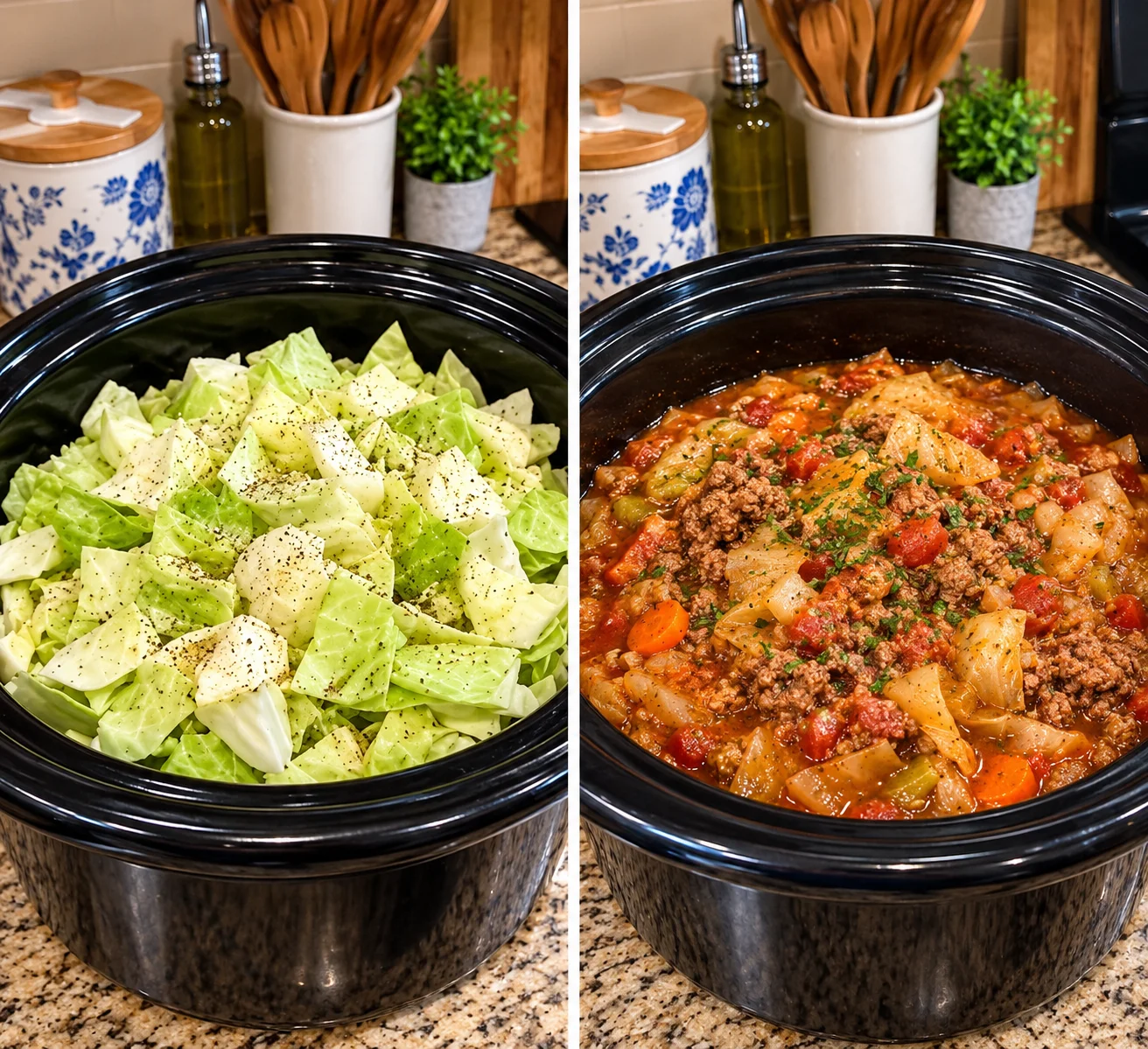
Description
Warm, hearty, and full of savory flavor, this Slow Cooker Cabbage Beef Stew combines tender chunks of beef with soft cabbage, carrots, garlic, and aromatic herbs in a rich, comforting broth. Slow cooking allows the beef to become fork-tender while the vegetables absorb the delicious juices, creating a satisfying homemade meal with minimal hands-on effort.
This easy beef and cabbage stew is a practical option for anyone looking for high-protein, low-carb dinner recipes. With protein-rich beef, fiber-containing vegetables, and no need for pasta or potatoes, it offers a flexible alternative to traditional beef stews. It is perfect for busy weekdays, cozy family dinners, and meal prep.
Short 3-Line Recipe Description
This slow cooker cabbage beef stew features tender beef, soft cabbage, and savory herbs simmered in a flavorful broth.
Packed with protein and naturally lower in carbohydrates than traditional potato-based stews, it is a satisfying one-pot meal.
Simply prepare the ingredients, let your slow cooker do the work, and enjoy a comforting dinner with minimal effort.
Can Slow Cooker Cabbage Beef Stew Support Weight Loss Goals?
Yes, this stew can fit into a weight-management eating plan when the ingredients and serving sizes align with your daily energy needs. Beef provides protein, which supports muscle maintenance and can help make meals more satisfying. Cabbage adds volume and fiber, while the broth creates a hearty dish without requiring a cream-based sauce.
Choosing lean beef, trimming excess visible fat, and measuring added oil can help keep the calories more moderate. Limiting higher-carbohydrate additions such as potatoes also makes it easier to control the carbohydrate content.
The recipe does not cause weight loss on its own. Overall calorie intake, activity, portion sizes, and eating habits are what matter most, but this stew can be a convenient and satisfying part of a balanced plan.
Does Slow Cooker Cabbage Beef Stew Fit a High-Protein Lifestyle?
Yes, this recipe fits a high-protein lifestyle because beef supplies substantial protein in every serving.
Cabbage, celery, and a modest amount of carrots provide fiber, flavor, and nutrients while keeping the dish relatively low in carbohydrates.
Each serving provides approximately 30–35 grams of protein, depending on the beef cut and portion size.
Net carbohydrates are estimated at around 8–11 grams per serving when the recipe is prepared without potatoes or added sugar.
For a lower-fat version, use lean stewing beef, trim visible fat, and skim excess fat from the broth before serving.
My Personal Experience
- Tender beef with deep, savory flavor: Slow cooking gives the beef plenty of time to soften and absorb the garlic, herbs, and broth.
The result is a hearty stew with meat that breaks apart easily and a rich homemade taste. - Cabbage that soaks up the broth: As the cabbage cooks, it becomes tender and takes on the flavors of the beef and seasonings.
It adds satisfying texture and volume without needing a large amount of starchy vegetables. - A convenient hands-off dinner: Once the ingredients are prepared and the slow cooker is set, the stew requires very little attention.
This makes it especially useful on busy days when you want a warm meal ready by dinnertime. - A protein-focused comfort meal: Beef supplies the main protein, while the vegetables add color and variety.
Each bowl can be filling without relying on rice, pasta, or potatoes. - Easy to customize for different tastes: Thyme, paprika, black pepper, and bay leaf give the stew a classic savory flavor.
A splash of vinegar or a little fresh parsley at the end brightens the broth and balances its richness.
Perfect For
- High-protein dinners: Beef supplies protein to help meet daily protein needs and support muscle maintenance.
- Low-carb recipes: Cabbage replaces much of the bulk traditionally provided by potatoes or grains.
- Keto diet plans: A version without potatoes, flour, or added sugar may fit a ketogenic meal plan when portions and total carbohydrates are considered.
- Meal-prep lunches: Individual portions are easy to refrigerate or freeze for convenient meals later in the week.
- Cold-weather comfort food: The warm broth and tender beef make this stew especially enjoyable in autumn and winter.
- Family dinners: Familiar beef and vegetable flavors make it a practical option for a shared meal.
- Busy weekdays: The slow cooker reduces the amount of active cooking required.
- Balanced eating plans: Pair the stew with additional non-starchy vegetables or enjoy it on its own for a hearty meal.
This stew is primarily a lunch or dinner recipe rather than a high-protein snack, dessert, or breakfast, although smaller portions can be enjoyed whenever they suit your schedule.
Why You’ll Love This Recipe
- Minimal hands-on cooking: The slow cooker gently simmers the beef and vegetables while you attend to other tasks.
A little preparation in the morning can provide a comforting dinner later in the day. - Naturally rich in protein: Beef is the main protein source and makes the stew substantial.
Choosing lean cuts helps balance protein intake with total fat and calories. - Lower in carbohydrates than traditional stew: Cabbage and celery provide bulk without relying on potatoes or flour-thickened gravy.
This makes the recipe useful for many low-carb meal plans. - Deep, homemade flavor: Garlic, onion, thyme, paprika, and beef broth create a savory base during slow cooking.
The extended cooking time helps the flavors blend beautifully. - Excellent for batch cooking: The recipe makes six servings that can be divided into convenient containers.
Leftovers are easy to reheat for quick lunches and dinners. - Simple everyday ingredients: Beef, cabbage, carrots, celery, and broth are familiar ingredients that are easy to combine.
You can adjust the vegetables and seasonings without changing the basic method.
Common Mistakes to Avoid
- Using a very lean, unsuitable beef cut without enough cooking time: Some lean cuts can become dry, while tougher stewing cuts need time to soften. Choose chuck or another suitable stewing cut and cook until fork-tender.
- Adding too much liquid: Cabbage and other vegetables release moisture as they cook. Use the specified broth quantity to prevent a diluted stew.
- Cutting the vegetables too small: Tiny cabbage pieces and thin carrot slices can become mushy during a long cooking cycle. Cut them into reasonably large, even pieces.
- Lifting the slow cooker lid repeatedly: Each time the lid is removed, heat escapes and cooking takes longer. Keep the lid closed and check the stew near the end of the recommended cooking time.
Required Equipment
- Slow cooker or Crock-Pot — maintains a steady, gentle cooking temperature for tender beef and vegetables.
- Sharp chef’s knife — makes it easier to cut beef, cabbage, and root vegetables into even pieces.
- Cutting board — provides a stable surface for safe ingredient preparation.
- Large skillet — helps brown the beef before slow cooking to develop a deeper, richer flavor.
- Measuring cups and spoons — keep broth and seasonings consistent for more reliable results.
- Wooden spoon or heat-resistant spatula — helps stir the ingredients during preparation and combine seasonings evenly.
- Tongs — make it easier to handle and turn beef while browning.
- Food thermometer — helps verify that the beef has reached a safe temperature and is cooked appropriately.
- Airtight storage containers — make it easy to portion, refrigerate, and freeze leftovers.
Storage Instructions
Refrigerator: Transfer leftovers into shallow, airtight containers and refrigerate within two hours of cooking. Keep at 40°F (4°C) or below and consume within 3–4 days.
Freezer: Cool the stew promptly, divide it into meal-sized portions, and place them in freezer-safe airtight containers or heavy-duty freezer bags. Leave a little room for expansion, label with the date, and freeze for up to 2–3 months for best quality.
Reheating: Thaw frozen portions in the refrigerator overnight when possible. Reheat on the stovetop over medium heat, stirring occasionally, until the stew reaches 165°F (74°C). You can also reheat individual portions in the microwave, stirring halfway through to distribute the heat evenly.
High-protein storage tip: Portion the beef evenly among containers so each serving retains a similar amount of protein. If the broth thickens or the vegetables absorb too much liquid, add a little water or low-sodium beef broth during reheating.
Proper storage helps maintain food quality and safety; it does not increase the stew’s protein content.
Recipe Details
- Preparation Time: 20 minutes
- Cooking Time: 7–8 hours on LOW or 4–5 hours on HIGH
- Total Time: Approximately 7 hours 20 minutes to 8 hours 20 minutes on LOW, including preparation
- Servings: 6
- Best Season for This Recipe: All-season, especially autumn and winter
- Total Calories per Serving: Approximately 300–350 calories
Nutrition values are estimates and will vary depending on the beef cut, trimming, broth, and final portion sizes.
Ingredients
Makes 6 servings.
For the Beef and Cabbage Stew
- 2 lb (900 g) beef chuck or stewing beef, trimmed and cut into 1-inch cubes
- 1 medium green cabbage (about 700 g whole; use approximately 500–600 g after removing the core and outer leaves), cut into large pieces
- 2 medium carrots (about 120 g), sliced
- 2 celery stalks (about 80 g), chopped
- 1 medium onion (about 150 g), diced
- 4 cloves garlic, minced
- 3 cups (720 ml) low-sodium beef broth
- 1 tablespoon (15 ml) olive oil
- 1 teaspoon dried thyme
- 1 teaspoon paprika
- 1/2 teaspoon dried rosemary
- 1/2 teaspoon black pepper
- 1/2–1 teaspoon salt, to taste
- 1 bay leaf
- 1 tablespoon (15 ml) apple cider vinegar, optional
- 2 tablespoons fresh parsley, chopped, optional garnish
Ingredient Notes
- Beef: Chuck or another stewing cut becomes tender during slow cooking. Trim visible excess fat for a leaner result.
- Cabbage: Cut into large, even pieces so it retains some texture throughout the cooking process.
- Carrots: The recipe uses a moderate amount for flavor and natural sweetness; reducing them slightly can lower the carbohydrate content.
- Beef broth: Choose low-sodium broth to make salt levels easier to control.
- Olive oil: Used for browning the beef. You can reduce the quantity or use a suitable nonstick skillet if needed.
- Apple cider vinegar: Optional, but a little acidity helps brighten the rich beef broth.
- Bay leaf: Adds subtle herbal flavor; remove it before serving.
Directions
Step 1: Prepare the ingredients — 10 minutes
Cut the beef into approximately 1-inch cubes. Remove the tough outer cabbage leaves and core, then cut the cabbage into large chunks.
Slice the carrots, chop the celery, dice the onion, and mince the garlic. Keep raw beef separate from ready-to-eat ingredients, and wash hands and utensils after handling it.
Step 2: Brown the beef — 5–8 minutes
Heat the olive oil in a large skillet over medium-high heat. Add the beef in batches, leaving space between the pieces.
Brown each batch for approximately 2–3 minutes per side until the surface develops a rich brown color. The beef does not need to cook through at this stage.
Transfer the browned beef to the slow cooker. Avoid overcrowding the skillet because the meat may release moisture and steam instead of browning.
High-protein tip: Use the full measured amount of beef and distribute it evenly among the finished servings to maintain consistent protein portions.
Step 3: Layer the vegetables and seasonings — 5 minutes
Add the onion, carrots, and celery to the slow cooker. Place the cabbage over and around the beef, then add the garlic, thyme, paprika, rosemary, black pepper, salt, and bay leaf.
Pour in the beef broth and stir gently to distribute the seasonings. The ingredients do not need to be completely submerged because the cabbage will release moisture during cooking.
Step 4: Slow-cook the stew — 7–8 hours on LOW or 4–5 hours on HIGH
Cover the slow cooker and set it to LOW for 7–8 hours or HIGH for 4–5 hours.
Avoid repeatedly opening the lid. Near the end of the cooking time, check that the beef can be pierced easily with a fork and that the cabbage is tender but not completely falling apart.
If the beef remains tough, continue cooking in 30-minute intervals until it softens. Tough cuts often need more time for their connective tissue to break down.
Step 5: Adjust the broth and seasoning — 5 minutes
Remove the bay leaf. Taste the broth and adjust the salt and pepper if necessary.
If the stew is too watery, transfer some of the liquid to a saucepan and simmer it over medium heat for 5–10 minutes until slightly reduced, then return it to the slow cooker. Alternatively, leave the lid slightly ajar for a short period only if your slow cooker manufacturer permits this.
Stir in the optional apple cider vinegar just before serving to brighten the flavor.
Step 6: Serve the stew — 2 minutes
Ladle the tender beef, cabbage, and vegetables into six portions. Garnish with chopped fresh parsley if desired.
The finished stew should have fork-tender beef, soft but recognizable cabbage pieces, and a savory broth with a rich beef flavor.
Serve hot on its own or with a side of additional non-starchy vegetables.
Nutrition Facts (Per Serving – Approximate)
Estimated for six servings using 2 lb (900 g) beef chuck, cabbage, carrots, celery, onion, olive oil, and low-sodium beef broth.
- Calories: 330 kcal
- Total Fat: 17 g
- Cholesterol: 90 mg
- Sodium: 480 mg
- Potassium: 850 mg
- Total Carbohydrates: 13 g
- Fiber: 4 g
- Net Carbs: 9 g
- Sugars: 6 g
- Protein: 32 g
- Calcium: 80 mg
These figures are approximate and not laboratory-tested. Actual nutrition depends on the beef cut, how much fat is trimmed, the broth brand, vegetable weights, and portion sizes. Net carbohydrates are calculated by subtracting fiber from total carbohydrates.
Notes
- Storage: Refrigerate leftovers within two hours in shallow, airtight containers and consume within 3–4 days. Freeze portions for up to 2–3 months for best quality.
- Reheating: Warm on the stovetop or in the microwave until the center reaches 165°F (74°C). Add a splash of broth if the stew becomes too thick.
- Food safety: Use a food thermometer as needed and ensure the beef is cooked safely and tender before serving. Tough stewing beef may need more time than the minimum cooking period.
- Allergy notes: The basic recipe contains no dairy, eggs, or gluten-containing ingredients when suitable broth and seasonings are used. Check product labels for allergens and cross-contact warnings.
- Flavor boosts: Add extra garlic, smoked paprika, fresh thyme, or a small splash of apple cider vinegar at the end.
- Higher-protein option: Increase the amount of lean beef and recalculate the nutrition per serving.
- Lower-carb option: Reduce the carrots slightly and avoid adding potatoes, flour, or cornstarch.
- Thicker broth: Reduce a portion of the cooking liquid in a saucepan instead of adding a flour-based thickener.
- Serving suggestion: Serve with a fresh green salad or steamed non-starchy vegetables for additional variety.
Frequently Asked Questions
1. Can I make cabbage beef stew without browning the beef first?
Yes, you can add the raw beef directly to the slow cooker, although browning it first develops a deeper, more savory flavor.
2. Is slow cooker cabbage beef stew keto-friendly?
It can fit many ketogenic meal plans when prepared without potatoes or added sugar, with the estimated net carbohydrates around 9 grams per serving.
3. Can I use ground beef instead of stewing beef?
Yes, browned ground beef can be used, but it requires less cooking time and produces a different texture than traditional chunks of slow-cooked beef.
4. Why is my beef still tough after slow cooking?
The beef may need more time because connective tissue in stewing cuts softens gradually, so continue cooking until the meat is fork-tender.
5. Can I prepare this stew the night before?
Yes, chop the vegetables and beef in advance, refrigerate them separately in covered containers, and assemble the ingredients in the slow cooker when you are ready to cook.
6. Can I freeze slow cooker cabbage beef stew?
Yes, divide the cooled stew into freezer-safe airtight containers, freeze for up to 2–3 months for best quality, and reheat thoroughly before serving.