Description
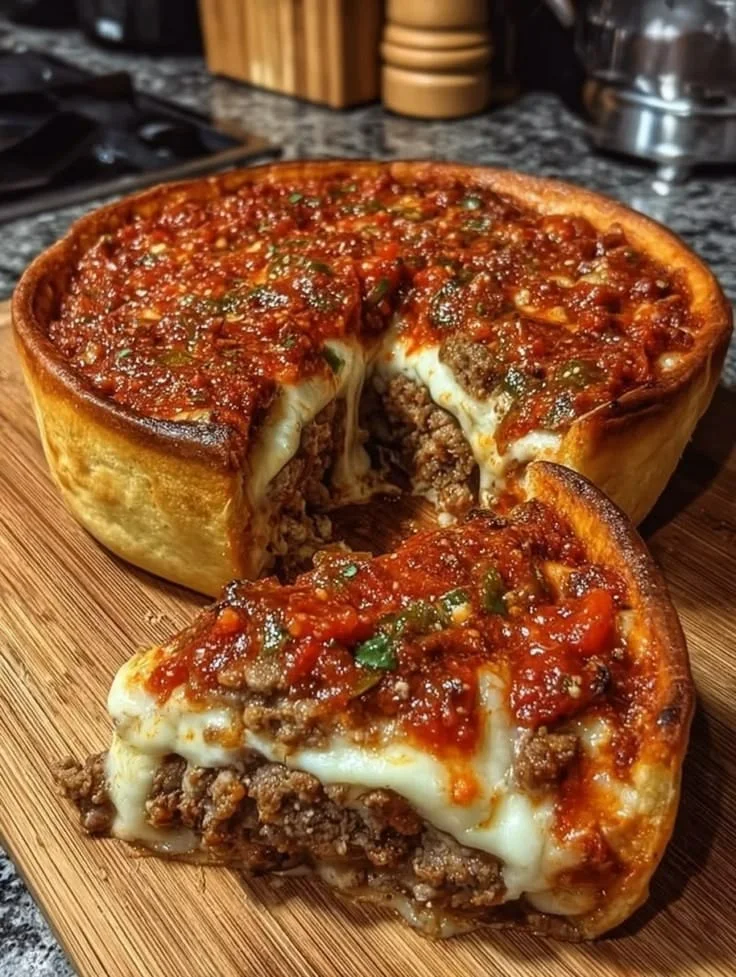
Craving a thick, cheesy pizza loaded with savory meat? This high-protein meat lovers pizza delivers a golden, fluffy crust, rich tomato sauce, melted mozzarella, and generous toppings of seasoned chicken, beef, and turkey pepperoni. Every slice combines a satisfying crunch around the edges with a soft, hearty center and plenty of classic pizza flavor.
Made with protein-rich ingredients and a homemade crust, this recipe is perfect for pizza lovers who want a more filling alternative to traditional takeout. It can also be adapted into a lower-carb pizza using a suitable low-carb crust, although the standard thick-crust version contains carbohydrates from flour.
Short 3-Line Recipe Description
This thick-crust meat lovers pizza features a golden homemade base, tangy tomato sauce, melted mozzarella, and flavorful meat toppings.
With chicken, lean beef, and turkey pepperoni, it provides a satisfying protein boost in every slice.
Perfect for family pizza night, meal prep, or a homemade alternative to takeout, with options to adjust the crust to your nutrition goals.
Can High-Protein Meat Lovers Pizza with Thick Crust Support Weight Loss Goals?
Yes, this pizza can fit into a weight-management eating plan when the serving size and ingredients match your individual needs. Chicken breast, lean beef, and mozzarella contribute protein, which helps support muscle maintenance and can make a meal more satisfying.
Preparing pizza at home allows you to control the amount of cheese, oil, processed meat, and sauce. Choosing lean meat, adding vegetables, and serving a reasonable portion can help balance calories while preserving the classic meat lovers flavor.
However, a thick crust adds calories and carbohydrates, and cheese and processed meats can contribute substantial fat and sodium. For a lighter option, use leaner meats, measure the cheese, and consider a smaller portion alongside a fresh salad. Weight management depends on your overall eating pattern rather than any single recipe.
Does High-Protein Meat Lovers Pizza with Thick Crust Fit a High-Protein Lifestyle?
Yes, this pizza can fit a high-protein lifestyle because chicken, lean beef, mozzarella, and turkey pepperoni all contribute protein.
The homemade flour-based crust provides carbohydrates and gives the pizza its signature thick, fluffy texture.
Depending on the serving size and topping quantities, each slice may provide approximately 25–35 grams of protein.
The standard recipe is not strictly low-carb or keto-friendly because the crust contains wheat flour.
For a lower-carb alternative, use a suitable low-carb crust and recalculate the protein and net carbohydrates based on the ingredients.
My Personal Experience
- A thick, fluffy crust: The homemade dough bakes into a soft, substantial base with a lightly crisp golden edge.
It provides the satisfying texture of a traditional pizza without relying on a thin, cracker-like crust. - Meaty flavor in every bite: Chicken, lean beef, and turkey pepperoni create a savory combination that complements the tomato sauce.
Distributing the toppings evenly helps every slice deliver a balanced mix of meat and cheese. - A satisfying protein boost: The combination of lean meats and mozzarella makes this pizza more protein-focused than many vegetable-only or lightly topped pizzas.
Cutting it into measured portions helps you estimate your protein intake more consistently. - Homemade pizza-night appeal: The melted cheese, bubbling sauce, and browned toppings create the familiar look and aroma of a freshly baked pizza.
You can customize the seasoning and toppings to suit your family’s preferences. - Easy to adapt: The recipe works with different lean meats, vegetables, and crust variations.
This flexibility makes it practical for people who want to adjust calories, protein, or carbohydrates without giving up pizza.
Perfect For
- High-protein meals: Chicken, beef, mozzarella, and turkey pepperoni provide several sources of protein in one meal.
- Family pizza nights: A large homemade pizza is easy to slice and share.
- Post-workout meals: The protein content can contribute to daily protein needs after exercise.
- Meal-prep lunches: Individual slices can be refrigerated or frozen and reheated when needed.
- Homemade comfort food: The thick crust and generous toppings satisfy traditional pizza cravings.
- Lower-carb meal plans: A modified low-carb crust can reduce carbohydrates compared with the standard flour-based base.
- Balanced everyday eating: Pair one or two slices with a fresh salad or roasted vegetables for a more varied meal.
- Weekend gatherings: The pizza is easy to customize with different toppings to accommodate different tastes.
This recipe is best suited to lunch or dinner rather than high-protein desserts or breakfast. The standard crust also makes it unsuitable for strict keto plans unless substantially modified.
Why You’ll Love This Recipe
- A hearty, thick crust: The dough rises into a soft center with a golden exterior.
It provides the satisfying texture of a classic pan-style pizza. - Multiple sources of protein: Chicken, beef, mozzarella, and turkey pepperoni contribute protein to each serving.
Using measured portions makes it easier to keep track of your overall nutrition. - Loaded with classic pizza flavor: Tangy tomato sauce, Italian seasoning, garlic, and melted cheese complement the savory meats.
The combination creates a rich flavor without requiring an elaborate sauce. - Customizable toppings: Add mushrooms, bell peppers, onions, or jalapeños for extra flavor and texture.
You can adjust the topping balance without changing the basic recipe. - A homemade alternative to takeout: Making the pizza yourself gives you control over the crust thickness, meat portions, and cheese.
It also makes it easier to select lower-sodium ingredients when available. - Convenient for leftovers: The pizza can be sliced before storing, making individual portions easy to reheat.
The crust and toppings retain good texture when reheated in an oven or air fryer.
Common Mistakes to Avoid
- Overloading the crust with toppings: Excess meat, sauce, and cheese can make the center soggy. Use measured amounts and distribute toppings evenly.
- Using dough before it has risen sufficiently: Thick-crust dough needs time to become airy. Let it rise in a warm, draft-free place until noticeably puffy.
- Adding wet or uncooked meat toppings: Raw or excessively moist toppings can release liquid and interfere with baking. Fully cook the chicken and beef before assembling the pizza, and drain excess fat.
- Baking at too low a temperature: A cool oven can produce a pale crust and poorly melted cheese. Preheat thoroughly to 425°F (220°C) and bake until the edges are golden and the cheese is bubbling.
Required Equipment
- Large mixing bowl — provides room to combine and knead the pizza dough.
- Kitchen scale or measuring cups — helps maintain consistent dough proportions and nutrition estimates.
- Rolling pin or hands — makes shaping the dough into a thick, even base easier.
- Large baking tray or pizza pan — supports the crust and helps it bake evenly.
- Parchment paper or cooking spray — reduces sticking and makes transferring the pizza easier.
- Large skillet — allows you to brown the beef and cook the chicken before adding them as toppings.
- Wooden spoon or spatula — helps stir the meat and sauce without damaging the pan.
- Sharp knife and cutting board — make it easier to prepare the meat and vegetables safely.
- Food thermometer — helps confirm that chicken reaches 165°F (74°C) and ground beef reaches 160°F (71°C).
- Pizza cutter — creates clean slices without pulling the toppings off the crust.
Storage Instructions
Refrigerator: Allow the pizza to cool until it is no longer steaming heavily, then transfer slices into shallow, airtight food-storage containers. Refrigerate within two hours of cooking, or within one hour if the surrounding temperature exceeds 90°F (32°C). Store at 40°F (4°C) or below and consume within 3–4 days.
Freezer: Arrange cooled slices in a single layer until firm, then transfer them to freezer-safe containers or bags. Separate layers with parchment paper to prevent sticking. Freeze for up to 2–3 months for best quality.
Reheating: For the best crust texture, reheat refrigerated slices in an oven at 350°F (175°C) for approximately 8–12 minutes, or in an air fryer at 325–350°F (160–175°C) for about 3–6 minutes. Heat until the center reaches 165°F (74°C). Microwaving is faster but may soften the crust.
High-protein meal-prep tip: Cut the pizza into equal portions and store them separately so the amount of meat and cheese per serving remains consistent. Proper storage preserves food quality and protein content; it does not increase the original protein content.
Recipe Details
- Preparation Time: 25 minutes
- Dough Rising Time: 45–60 minutes
- Cooking Time: 20–25 minutes
- Total Time: Approximately 1 hour 35 minutes to 1 hour 50 minutes
- Servings: 4 large servings
- Best Season for This Recipe: All-season
- Total Calories per Serving: Approximately 650–750 kcal
Calories and nutrition values are approximate and depend on the exact flour, meat leanness, cheese, crust thickness, and portion size.
Ingredients
Makes one large thick-crust pizza, divided into 4 servings.
For the Thick Pizza Crust
- 2 cups (250 g) all-purpose flour
- 1 teaspoon instant yeast
- 1 teaspoon sugar
- 3/4 teaspoon salt
- 3/4 cup (180 ml) warm water, approximately 105–110°F (40–43°C)
- 1 tablespoon (15 ml) olive oil
For the Meat Lovers Toppings
- 8 oz (225 g) boneless, skinless chicken breast
- 6 oz (170 g) lean ground beef, preferably 90–93% lean
- 2 oz (56 g) turkey pepperoni
- 1 cup (240 g) plain tomato pizza sauce
- 1 1/2 cups (150 g) shredded part-skim mozzarella cheese
- 1/2 small onion (about 50 g), thinly sliced
- 1/2 small green bell pepper (about 50 g), sliced
- 2 cloves garlic, minced
- 1 teaspoon Italian seasoning
- 1/2 teaspoon paprika
- 1/4 teaspoon black pepper
- 1/4 teaspoon salt, or to taste
- 1 teaspoon olive oil for cooking the meat
Optional Garnishes
- 1 tablespoon chopped fresh basil or parsley
- A pinch of chili flakes
- A light sprinkle of grated Parmesan
Ingredient Notes
- Flour: All-purpose flour gives the crust its traditional thick, fluffy texture. Whole-wheat flour can be substituted partially, although it may produce a denser crust.
- Yeast: Instant yeast can be mixed directly into the dry ingredients. If using active dry yeast, dissolve it in the warm water with the sugar first.
- Warm water: Use warm rather than hot water to avoid damaging the yeast.
- Chicken and beef: Cook both before topping the pizza to help ensure food safety and prevent excess moisture.
- Turkey pepperoni: This provides a familiar pepperoni flavor; sodium and fat content vary by brand.
- Mozzarella: Part-skim mozzarella helps create a stretchy, cheesy topping while moderating the fat content compared with some full-fat alternatives.
- Tomato sauce: Choose plain or lower-sodium pizza sauce to control added sugar and sodium.
- Lower-carb alternative: A suitable low-carb crust can replace the flour dough, but the recipe’s baking time, texture, and nutrition will change.
Directions
Step 1: Prepare the dough — 5–7 minutes
In a large mixing bowl, combine the flour, instant yeast, sugar, and salt. Add the warm water and olive oil.
Mix until a rough dough forms, then knead on a lightly floured surface for 5–7 minutes, until the dough feels smooth and elastic.
If the dough is very sticky, add flour one tablespoon at a time. Avoid adding too much flour, as this can make the finished crust dense.
Step 2: Let the dough rise — 45–60 minutes
Place the dough in a lightly oiled bowl and cover it with a clean kitchen towel or reusable cover.
Leave it in a warm, draft-free place for 45–60 minutes, or until it looks noticeably puffed and has increased in size.
Texture tip: Properly risen dough should feel soft and slightly springy when gently pressed.
Step 3: Cook the meat — 10–12 minutes
While the dough rises, heat 1 teaspoon olive oil in a skillet over medium-high heat.
Add the ground beef, breaking it into small crumbles. Cook for approximately 5–7 minutes, until browned and no longer pink, reaching an internal temperature of 160°F (71°C).
In the same skillet, cook the diced chicken with the paprika and black pepper over medium heat for approximately 5–7 minutes, depending on the size of the pieces. Stir regularly and cook until the thickest pieces reach 165°F (74°C).
Transfer the cooked meat to a plate. Drain excess grease and allow the meat to cool slightly before assembling the pizza.
Step 4: Preheat the oven and shape the crust — 5 minutes
Preheat the oven to 425°F (220°C). Lightly grease a large pizza pan or baking tray.
Press the risen dough into a round or rectangular shape approximately 10–12 inches (25–30 cm) across, depending on your preferred thickness.
Keep the edges slightly higher than the center to form a thick outer crust. Transfer the dough to the prepared pan.
Step 5: Add the sauce and toppings — 5 minutes
Spread the tomato sauce evenly over the dough, leaving a small border around the edges.
Sprinkle on the Italian seasoning and minced garlic. Add the cooked chicken, ground beef, sliced turkey pepperoni, onion, and bell pepper.
Finish with the shredded mozzarella, distributing it evenly across the toppings.
High-protein tip: Divide the cooked meats evenly across the pizza rather than concentrating them in the center. This helps provide a more consistent amount of protein per slice.
Step 6: Bake the pizza — 20–25 minutes
Place the pizza on the middle oven rack and bake at 425°F (220°C) for approximately 20–25 minutes.
Check the pizza after 18 minutes. The crust should look golden around the edges, the cheese should be melted and bubbling, and the base should feel firm when carefully lifted.
If the cheese browns too quickly before the thick center crust is cooked, loosely cover the top with foil and continue baking.
Step 7: Rest and slice — 5 minutes
Remove the pizza from the oven and let it rest for 5 minutes before cutting.
This brief resting period allows the cheese to settle and helps the toppings stay in place. Garnish with fresh basil, parsley, or chili flakes if desired.
Cut into four equal servings and serve warm.
Nutrition Facts (Per Serving – Approximate)
Estimated for one-quarter of the pizza made with all listed ingredients, including the thick flour crust, lean ground beef, chicken breast, turkey pepperoni, and part-skim mozzarella.
- Calories: 700 kcal
- Total Fat: 25 g
- Cholesterol: 125 mg
- Sodium: 1,050 mg
- Potassium: 650 mg
- Total Carbohydrates: 63 g
- Fiber: 4 g
- Net Carbs: 59 g
- Sugars: 6 g
- Protein: 48 g
- Calcium: 300 mg
All nutrition figures are approximate estimates rather than laboratory-tested values. The protein total may vary considerably depending on the meat and cheese brands, dough measurements, and the final serving size. Net carbohydrates are calculated by subtracting fiber from total carbohydrates.
Notes
- Storage: Refrigerate slices in airtight containers within two hours of cooking and consume within 3–4 days. Freeze individual slices for up to 2–3 months for best quality.
- Reheating: Use an oven or air fryer to restore the crust’s crispness. Reheat until the center reaches 165°F (74°C).
- Allergy notes: This recipe contains wheat and milk and may contain soy or other allergens depending on the packaged sauce, cheese, and turkey pepperoni. Check ingredient labels carefully.
- Flavor boosts: Add smoked paprika, oregano, chili flakes, fresh basil, or a little Parmesan for extra savory flavor.
- Extra protein: Increase the lean chicken or beef slightly, keeping the meat cooked and drained before adding it to the pizza.
- Lower-sodium option: Use reduced-sodium sauce and cheese, and limit the pepperoni if sodium is a concern.
- Lower-carb option: Substitute a suitable low-carb crust and recalculate the nutrition based on its ingredients. A traditional thick flour crust is not suitable for strict keto plans.
- Crispier base: Preheat the pizza pan before adding the shaped dough, using oven-safe handling precautions, or bake the plain crust for 4–5 minutes before adding the toppings.
- Serving suggestion: Pair a slice with a green salad, cucumber salad, or roasted vegetables for additional variety.
Frequently Asked Questions
1. How much protein does this meat lovers pizza contain?
The full pizza provides approximately 48 grams of protein per serving under the stated ingredient assumptions, although actual values depend on the meat, cheese, and serving size.
2. Can I make this thick-crust pizza ahead of time?
Yes, you can prepare the dough and cook the meat in advance, refrigerate them separately, and assemble the pizza shortly before baking.
3. Is thick-crust meat lovers pizza low-carb?
No, the standard recipe contains substantial carbohydrates from flour, but a suitable low-carb crust can reduce the carbohydrate content.
4. Can I use different meats for the toppings?
Yes, cooked turkey, lean pork, chicken sausage, or additional lean beef can replace some of the listed meats, although the nutrition will change.
5. Why is my thick pizza crust doughy in the middle?
A doughy center can result from excessive toppings, an oven that is not fully preheated, or a crust that is too thick for the baking time, so bake until the base is firm and cooked through.
6. Can I freeze leftover meat lovers pizza?
Yes, freeze cooled slices individually in airtight, freezer-safe packaging for up to 2–3 months for best quality and reheat thoroughly before eating.