Description
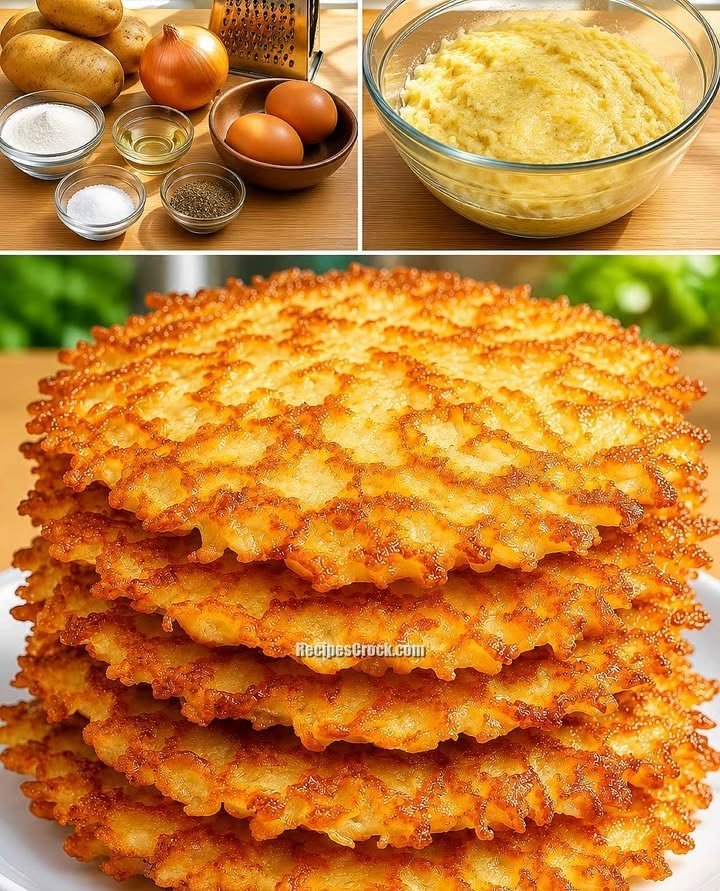
Crispy Golden Potato Pancakes are the perfect combination of crunchy, golden edges and a soft, tender potato center. Made with freshly grated potatoes, onion, garlic, and simple seasonings, these homemade pancakes are pan-fried until beautifully crisp and served with a cool, creamy garlic yogurt sauce that adds a refreshing tang to every bite.
This easy potato pancake recipe is a comforting choice for breakfast, brunch, snacks, or a light dinner. The yogurt dipping sauce adds protein, while the potatoes provide satisfying carbohydrates and a naturally delicious flavor. Although traditional potato pancakes are not low-carb, you can adapt the recipe with a smaller potato portion and serve it with extra high-protein Greek yogurt sauce for a more protein-focused meal.
Short 3-Line Description
These crispy golden potato pancakes feature crunchy edges, a tender center, and delicious garlic flavor.
Serve them hot with a creamy garlic Greek yogurt sauce for a refreshing, protein-friendly twist.
Perfect for breakfast, brunch, family snacks, or an easy homemade side dish.
Can Crispy Golden Potato Pancakes Support Weight Loss Goals?
Yes, crispy golden potato pancakes can fit into a weight-management eating plan when prepared with sensible portions and a controlled amount of oil. Potatoes provide carbohydrates and some fiber, while the garlic yogurt sauce adds protein and creaminess without relying entirely on mayonnaise or heavy cream.
To make the meal more filling, use plain Greek yogurt in the sauce, measure the cooking oil, and serve the pancakes alongside vegetables or another lean protein source. Baking or air-frying can also reduce the amount of added oil compared with traditional pan-frying.
However, potatoes are naturally carbohydrate-rich, so this recipe is not inherently low-carb or keto-friendly. Weight management depends on your overall calorie intake and eating habits, rather than any single recipe.
Does Crispy Golden Potato Pancakes Fit a High-Protein Lifestyle?
These potato pancakes can fit into a high-protein lifestyle when served with a generous portion of Greek yogurt garlic sauce.
Potatoes provide energy, while eggs help bind the grated potato mixture and contribute additional protein.
The traditional recipe contains approximately 30–35 g of net carbohydrates per serving, depending on potato size and flour quantity.
The yogurt sauce improves the protein content, especially when made with strained, high-protein Greek yogurt.
For a more protein-focused meal, serve the pancakes with extra yogurt sauce or a side of eggs, while recognizing that the standard recipe is not suitable for strict keto plans.
My Personal Experience
- Crispy edges with a tender center: Finely grated potatoes create delicate, crunchy edges when they meet a properly heated skillet.
The inside remains soft and comforting, especially when the potatoes are squeezed dry before cooking. - A delicious garlic yogurt pairing: The creamy sauce adds coolness and a gentle garlic kick that balances the savory pancakes.
Thick Greek yogurt creates a rich dipping texture while contributing protein to the meal. - Simple ingredients with homemade flavor: Fresh potatoes, onion, garlic, and black pepper create a familiar, satisfying taste.
A little fresh parsley or dill adds brightness without making the recipe complicated. - Easy to customize for different occasions: The pancakes work as a breakfast side, an afternoon snack, or part of a casual dinner.
You can adjust their size and serve them with eggs, salad, or extra yogurt sauce. - Best enjoyed freshly cooked: Serving the pancakes straight from the skillet preserves their crisp edges and soft centers.
Reheating them in an oven or air fryer can restore much of their original crunch.
Perfect For
- Homemade breakfast recipes: Serve the pancakes with eggs and garlic yogurt sauce for a satisfying morning meal.
- High-protein meal ideas: Pair the potato pancakes with extra Greek yogurt sauce or another lean protein source.
- Family brunches: Their golden color and familiar flavor make them an inviting addition to a brunch table.
- Vegetarian meals: The recipe uses potatoes, eggs, yogurt, and seasonings without meat.
- Budget-friendly cooking: Potatoes and basic pantry ingredients make this recipe affordable and accessible.
- Party appetizers: Prepare smaller pancakes and arrange them with garlic yogurt dip for easy sharing.
- Comfort-food cravings: Crispy edges and a creamy sauce create a satisfying combination of textures.
- Meal-prep sides: Cook a batch ahead and reheat in an oven or air fryer when needed.
Traditional potato pancakes are not ideal for strict low-carb or keto diets, and the recipe is primarily a savory meal rather than a high-protein dessert or standalone protein snack.
Why You’ll Love This Recipe
- Golden and crunchy: Properly drained potatoes and medium-hot oil help develop a crisp exterior.
Each pancake has a tender middle that contrasts beautifully with the browned edges. - A creamy homemade dipping sauce: Greek yogurt, fresh garlic, and lemon juice create a tangy sauce in just a few minutes.
It complements the richness of the fried potatoes without requiring a heavy mayonnaise-based dip. - Made with everyday ingredients: Potatoes, eggs, flour, onion, and seasonings are easy to find.
You can prepare the entire dish without specialized ingredients or complicated techniques. - Easy to serve in different ways: Make small pancakes for snacks or larger ones for breakfast and lunch.
The garlic yogurt sauce works equally well as a dip or a spooned topping. - Customizable protein content: Using high-protein Greek yogurt makes the sauce more protein-rich than many traditional dips.
Adding eggs or another protein source alongside the pancakes creates a more balanced meal. - Great for sharing: The pancakes look attractive piled on a platter with fresh herbs and a bowl of sauce.
Their crispy texture and mild seasoning make them easy to pair with different side dishes.
Common Mistakes to Avoid
- Not squeezing out enough moisture: Wet grated potatoes can make the pancakes soggy and difficult to flip. Squeeze them firmly in a clean kitchen towel before mixing.
- Using oil that is too cool: The pancakes may absorb excess oil instead of crisping. Heat the skillet over medium to medium-high heat before adding the mixture.
- Making the pancakes too thick: Thick pancakes can brown outside before the potato cooks through. Shape them into thin, even patties for better results.
- Adding too much flour: Excess flour can make the pancakes dense and doughy. Start with the measured amount and add only a small extra quantity if the mixture cannot hold together.
Required Equipment
- Box grater — creates evenly shredded potatoes that cook quickly and develop crisp edges.
- Large mixing bowl — provides room to combine the potato mixture without spilling.
- Clean kitchen towel or cheesecloth — removes excess moisture for crispier pancakes.
- Large non-stick skillet — helps prevent sticking and encourages even browning.
- Wide spatula — makes flipping the pancakes easier without breaking them.
- Measuring cups and spoons — keep the ingredient quantities consistent.
- Small mixing bowl — allows you to prepare the garlic yogurt sauce separately.
- Whisk or spoon — blends the sauce until smooth and creamy.
- Paper towels and a plate — absorb excess surface oil after frying.
Storage Instructions
Refrigerator: Allow the cooked pancakes to cool, then transfer them to a shallow airtight container. Place parchment paper between layers to prevent sticking and refrigerate at 40°F (4°C) or below for 3–4 days. Store the garlic yogurt sauce separately in a covered container and consume it within 3–4 days, provided it has been handled and stored safely.
Freezer: Freeze cooled pancakes in a single layer on a tray until firm, then transfer them to a freezer-safe airtight container or bag with parchment paper between layers. Freeze for up to 2–3 months for best quality. The yogurt sauce is best prepared fresh because freezing can cause separation and a grainy texture.
Reheating: Reheat refrigerated or frozen pancakes in an oven at 375°F (190°C) or in an air fryer at 350°F (175°C) until hot and crisp. Refrigerated pancakes typically need around 5–10 minutes in the oven or 3–5 minutes in the air fryer; frozen pancakes will take longer. Check that the center reaches 165°F (74°C) when reheating leftovers.
Protein-friendly storage tip: Keep the yogurt sauce separate until serving to maintain the pancakes’ crisp texture and the sauce’s creamy consistency. Storage does not increase the protein content, but portioning the pancakes and sauce separately makes balanced servings easier.
Recipe Details
- Preparation Time: 20 minutes
- Cooking Time: 20 minutes
- Total Time: 40 minutes
- Servings: 4
- Best Season for This Recipe: All-season
- Total Calories per Serving: Approximately 330 calories, including garlic yogurt sauce
Nutrition values are approximate and depend on potato size, oil absorption, flour quantity, and the type of Greek yogurt used.
Ingredients
Makes 4 servings, approximately 3 small pancakes per serving.
For the Potato Pancakes
- 1 lb (450 g) starchy potatoes, peeled
- 1 small onion (about 70 g), finely grated
- 1 large egg
- 3 tablespoons (24 g) all-purpose flour
- 2 cloves garlic, minced
- 1/2 teaspoon salt, or to taste
- 1/4 teaspoon freshly ground black pepper
- 1/2 teaspoon paprika, optional
- 3 tablespoons (45 ml) olive oil or another suitable cooking oil, for pan-frying
- 1 tablespoon chopped fresh parsley, optional
For the Garlic Yogurt Sauce
- 1 cup (240 g) plain Greek yogurt
- 1 small garlic clove, finely minced or grated
- 1 tablespoon (15 ml) fresh lemon juice
- 1 tablespoon chopped fresh dill or parsley
- 1/4 teaspoon salt, or to taste
- 1/8 teaspoon black pepper
- 1–2 teaspoons water, optional, to adjust consistency
Ingredient Notes
- Potatoes: Starchy potatoes, such as russets, give the pancakes a crisp exterior and fluffy center. Waxy potatoes work too but may produce a slightly different texture.
- Onion: Grated onion adds flavor and moisture, so squeeze it lightly if it releases a lot of liquid.
- Flour: A small amount helps bind the mixture. Gluten-free all-purpose flour can be used as a substitute.
- Greek yogurt: Plain strained Greek yogurt provides the thickest texture and generally contains more protein than regular yogurt.
- Garlic: Use one small clove in the sauce for a mild flavor or add more if you prefer a stronger garlic taste.
- Oil: The stated amount is an estimate for pan-frying; the actual amount absorbed will vary.
Directions
Step 1: Prepare the potatoes — 8 minutes
Peel the potatoes and grate them using the large holes of a box grater. Grate the onion and combine it with the potatoes.
Transfer the mixture to a clean kitchen towel and squeeze firmly over the sink to remove as much liquid as possible.
Texture tip: The drier the grated potatoes, the easier it is to achieve crisp, golden pancakes.
Step 2: Mix the pancake batter — 3 minutes
Place the drained potatoes and onion in a mixing bowl. Add the egg, flour, minced garlic, salt, black pepper, and optional paprika.
Stir until the mixture is evenly combined and holds together when pressed. If the mixture still seems very wet, squeeze it again before adding more flour.
High-protein tip: The egg contributes some protein, while the Greek yogurt sauce supplies much of the additional protein in the finished meal.
Step 3: Prepare the garlic yogurt sauce — 3 minutes
In a small bowl, combine the Greek yogurt, minced garlic, lemon juice, chopped dill or parsley, salt, and black pepper.
Stir until smooth and creamy. Add 1–2 teaspoons of water if you prefer a thinner dipping consistency.
Cover and refrigerate the sauce while you cook the pancakes so the garlic flavor can develop.
Step 4: Heat the skillet — 2 minutes
Place a large non-stick skillet over medium to medium-high heat and add enough oil to lightly coat the bottom.
Allow the oil to heat for approximately 1–2 minutes. It should shimmer gently but should not smoke.
If a small amount of potato mixture sizzles when added, the pan is ready.
Step 5: Shape and fry the pancakes — 12–16 minutes
Spoon approximately 2 tablespoons of potato mixture into the skillet for each small pancake. Flatten gently with the back of a spoon to create patties about 1/4 inch (6 mm) thick.
Cook over medium heat for 3–4 minutes per side, turning when the bottoms are golden brown and the edges look set. Avoid moving the pancakes too early, as they may break before forming a crust.
Work in batches and avoid overcrowding the skillet. Add a little more oil between batches if necessary, allowing it to heat before adding more potato mixture.
The finished pancakes should be deeply golden on both sides, crisp at the edges, and tender inside. If they brown too quickly, lower the heat to medium-low so the potatoes have time to cook through.
Step 6: Drain and serve — 2 minutes
Transfer the cooked pancakes to a paper-towel-lined plate to absorb excess surface oil.
Serve immediately with the chilled garlic yogurt sauce and optional fresh parsley or dill.
For a more protein-focused meal, serve with extra Greek yogurt sauce or a side of scrambled eggs.
Nutrition Facts (Per Serving – Approximate)
Estimated for one-quarter of the complete recipe, including a portion of the garlic Greek yogurt sauce.
- Calories: 330 kcal
- Total Fat: 16 g
- Cholesterol: 55 mg
- Sodium: 500 mg
- Potassium: 850 mg
- Total Carbohydrates: 39 g
- Fiber: 4 g
- Net Carbs: 35 g
- Sugars: 5 g
- Protein: 13 g
- Calcium: 140 mg
These figures are estimates, not laboratory-tested results. Actual nutrition varies according to potato variety, yogurt brand, cooking oil absorbed, and portion size. Net carbohydrates are calculated by subtracting fiber from total carbohydrates.
Notes
- Storage: Refrigerate the pancakes and yogurt sauce separately for up to 3–4 days. Freeze cooked pancakes for up to 2–3 months for best quality.
- Reheating: Use an oven or air fryer to restore crispness; microwaving is convenient but can make the pancakes softer.
- Allergy notes: The recipe contains egg, dairy, and wheat if regular all-purpose flour is used. Choose suitable substitutes and check ingredient labels for other allergens.
- Flavor boosts: Add smoked paprika, chopped chives, fresh dill, or a pinch of chili flakes to customize the pancakes or sauce.
- Extra protein: Use high-protein Greek yogurt and serve a generous portion of sauce. Add eggs or another protein-rich side if you want a more substantial meal.
- Lower-oil option: Bake the pancakes at 425°F (220°C) on a lightly oiled parchment-lined tray for approximately 20–25 minutes, flipping halfway through. They may not be quite as crisp as pan-fried pancakes.
- Lower-carb option: Traditional potato pancakes are carbohydrate-rich. For a lower-carb variation, experiment with grated cauliflower, but squeeze out excess moisture and adjust the binder because the texture will differ.
- Serving suggestion: Pair the pancakes with a cucumber salad or fresh greens for a more balanced plate.
Frequently Asked Questions
1. How do I make potato pancakes extra crispy?
Squeeze as much liquid as possible from the grated potatoes, shape the pancakes thinly, and cook them in properly heated oil without overcrowding the pan.
2. Can I make potato pancakes in an air fryer?
Yes, lightly brush the shaped pancakes with oil and air-fry at 375°F (190°C) for approximately 12–16 minutes, flipping halfway through and checking for doneness.
3. Can I prepare the potato mixture ahead of time?
It is best to grate and cook the potatoes shortly after preparation because raw grated potatoes can discolor and release moisture, although you can mix the dry seasonings ahead.
4. Is garlic yogurt sauce high in protein?
Greek yogurt provides a useful amount of protein, with the exact amount depending on the brand and the serving size.
5. Are crispy golden potato pancakes low-carb or keto-friendly?
Traditional potato pancakes are not low-carb or keto-friendly because potatoes contain substantial carbohydrates, although a cauliflower-based variation can reduce the carb content.
6. Can I freeze leftover potato pancakes?
Yes, freeze the cooled pancakes in a single layer before transferring them to a freezer-safe container, then reheat in an oven or air fryer until hot and crisp.